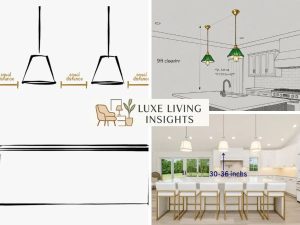
Lighting is the heartbeat of a home. This kitchen dining lighting guide helps you master ambient, task, and accent lighting. We explore how to balance pendant spacing, Kelvin temperatures, and CRI to transform your space into a functional and inviting sanctuary.
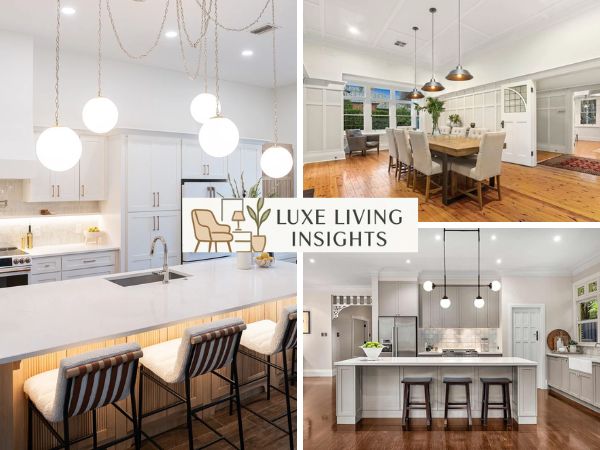
The Fundamentals of Layered Lighting for Kitchens and Dining Rooms
Great design starts with a plan. Layered lighting is the secret to a professional look. It ensures your room is not just bright, but also comfortable. Lighting defines space function. In an open-plan home, light acts as an invisible wall.
It separates the busy cooking zone from the relaxed eating area. Understanding how to decorate your room with lights is the first step toward creating visual comfort.
Ambient kitchen light provides general illumination. It is the base layer. Most designers use recessed lighting or flush mount fixtures for this. Recessed lights should be embedded in the ceiling and spaced roughly 1.5 to 2 meters (4-6 feet) apart. This ensures even coverage and fills dark corners. Ambient lighting fills dark corners, making the room feel larger.
However, one layer is never enough. You must integrate visual comfort. Layers optimize visual comfort by reducing the strain on your eyes. Without layers, a kitchen can feel flat or clinical. By mixing track lighting systems with natural light, you create a dynamic environment.
Remember, natural light complements artificial light. Use large windows to your advantage during the day and let your lighting zones take over at night. This effective kitchen and dining lighting strategy balances the luminous flux needed for day and night activities.
Optimizing Task Lighting for Safe and Efficient Food Preparation
Cooking requires precision. Task lighting is essential for safety. Task light reduces shadows on countertop surfaces where you handle sharp knives. Under-cabinet LEDs are the best tool for this. These LED strips are installed under cabinets to provide direct lighting.
When setting up your workstation, you might also consider the pendant light over kitchen sink height to ensure no shadows fall on your prep area.
For the best results, focus on the Color Rendering Index. A light source with a 90+ CRI is vital. High CRI improves food appearance, making ingredients look vibrant and fresh.

Low CRI dulls material colors, which can make your kitchen look dated. Under-cabinet light should be placed at the bottom of the wall unit to maximize the illumination level. Aim for 50 foot-candles on your countertop.
Cool light enhances task visibility. Use bulbs between 3000K-4000K for these areas. This cool white light helps you stay alert and focused. Cool bulbs support cooking tasks by highlighting textures and details that warm light might hide.
Task lighting prevents eye strain, allowing you to prep meals for hours without fatigue. Photometry proves that targeted light improves speed and accuracy in professional and home kitchens alike.
Designing the Perfect Kitchen Island Lighting Setup
The kitchen island is often the centerpiece of the home. Pendants anchor the kitchen island, providing both light and style. When choosing a pendant light, consider the mounting height.
A kitchen island pendant should have a mounting height of 70–85 cm (27–33 inches) above the surface. If the island doubles as a dining space, height-adjustable luminaires offer incredible design flexibility.
Spacing is equally important. Pendants should be spaced across a long island with about 60-75 cm (24–30 inches) between them. This prevents harsh shadows. If you have a smaller island, the rule of three might not apply. Sometimes two large fixtures create more impact.
Large fixtures dominate small rooms, so scale your choice to your island size. Proper spacing ensures even coverage across the entire workspace.
Consider the material of your fixtures. A rattan pendant made of natural fiber adds warmth and a Japandi or Modern Organic feel. These rattan textures soften the direct light, creating a beautiful glow. Matte finishes absorb direct light, while glossy finishes reflect light points.
Choose a finish that complements your cabinet hardware, such as brass, matte black, or brushed nickel. Metal finishes provide an aesthetic that can be modern or industrial depending on the shape.
Creating an Inviting Atmosphere in the Dining Area
The dining room is for connection. A chandelier should be centered above the dining table. To get the size right, ensure the chandelier diameter is 1/2 to 2/3 the table width.
This creates visual balance. Linear fixtures suit rectangular tables, while round fixtures suit circular tables. Exploring modern ideas for room light decoration can help you find a piece that serves as accent lighting even when turned off.
Hanging heights for dining tables are slightly lower than island heights. Aim for 55–70 cm (22–28 inches) or up to 30-34 inches of clearance depending on the ceiling. This height feels intimate but doesn’t block your view of guests.
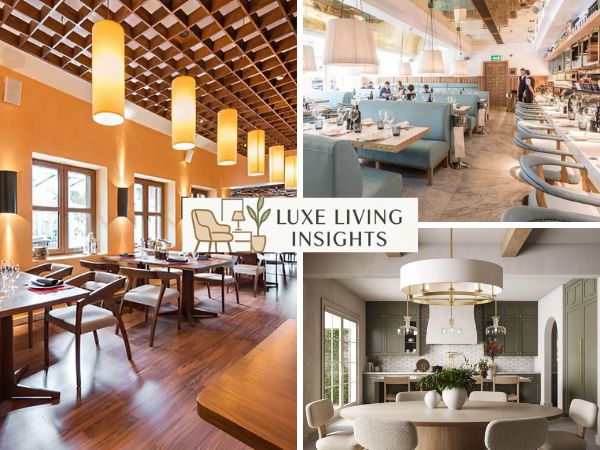
Warm light creates a cozy atmosphere. Use 2700K-3000K bulbs here. Warm bulbs favor dining areas because they mimic the glow of candlelight, enhancing the interior design psychology of the room.
Don’t forget the perimeter. Sconces mounted on dining walls add a layer of accent light. Accent lighting adds visual interest and highlights architectural features like art or a beautiful backsplash.
Sconces provide indirect light that bounces off the ceiling, softening the overall mood of the living area. Accent lighting is well suited for light-dark contrasts, breathing life into the room.
Technical Essentials: Lumens, Kelvins, and Color Quality
Understanding the technical side is crucial for a successful kitchen dining lighting guide. Kelvin (K) measures the color of the light. Luminous flux, measured in lumens, tells you how bright the bulb is.
LED bulbs offer high energy efficiency, consuming up to 85% less energy than halogen bulbs. This is a solid-state lighting victory for the environment.
| Entity | Attribute | Value |
|---|---|---|
| Kitchen Island Pendant | Mounting Height | 30-36 inches |
| Dining Table Pendant | Mounting Height | 30-34 inches |
| Task Lighting | Color Temperature | 3000K-4000K |
| Ambient Lighting | Color Temperature | 2700K-3000K |
| Light Source | CRI | 90+ |
Proper spacing ensures even coverage. If your ceiling height is high, you may need longer cords or chains. Ceiling height dictates cord length. Always check the voltage and wattage requirements of your luminaire to ensure safety and Energy Star certification. Using high-quality current LED light sources is the best functional and aesthetic choice today.
Enhancing Versatility with Dimmers and Smart Controls
Flexibility is luxury. A dimmer controls light intensity. It is the most important tool for a multi-use space. Dimmers shift room mood from a bright breakfast spot to a romantic dinner setting.
Smart controls automate lighting schedules, allowing your home to wake up and wind down with you. Smart lighting controls represent the future of home automation.
Smart bulbs offer control via mobile apps or voice commands. You can create preset lighting scenes for Work Mode or Dinner Mode. These tools help optimize your visual comfort throughout the day.

Architectural lighting is no longer just for professionals; with smart bulbs, any homeowner can achieve visual interest with a single tap.
Selecting Materials and Finishes to Match Your Interior Style
Your fixtures should tell a story. Brass finishes match cabinet hardware for a classic, high-end look. Matte black works well in industrial or modern spaces. If you prefer a Modern Organic aesthetic, look for natural fiber or glass diffusers. A diffuser softens harsh glare, which is essential for visual comfort. Matte finishes absorb direct light, while glossy finishes reflect light points.
Reflective surfaces amplify light brightness. If you have a white kitchen, you might need fewer lumens. If your kitchen has dark wood, you will need more power. Kitchen layout dictates the lighting plan. Ensure your fixture finishes are consistent throughout the open floor plan to keep the design cohesive. Lighting concepts can be customised to suit any kitchen style and layout.
Frequently Asked Questions
What is the ideal height for pendant lights above a dining table?
For a dining table, you should hang pendant lights or chandeliers between 75-90 cm (30-36 inches) above the tabletop. This height provides enough light for meals while keeping the fixture out of the direct line of sight between guests. Proper height ensures the light serves as a functional tool without becoming an obstacle.
Which color temperature is best for a kitchen workspace?
A cool white light between 3,000K and 4,000K is ideal for work surfaces. This range provides a crisp, clear light that improves focus and safety during food preparation. It helps the cook identify textures and ensures knives are handled with precision under direct, bright illumination.
Why is the Color Rendering Index (CRI) important for food preparation?
The CRI measures how accurately a light source reveals the true colors of objects. For a kitchen, a CRI of 80+ is the minimum requirement, though 90+ is preferred. This ensures that food looks natural and appetizing, which is crucial for both cooking accuracy and the overall aesthetic presentation of a meal.
Can I use the same lights for both cooking and dining?
While you can use the same types of fixtures, it is better to use dimmable lights. Dimmers allow you to shift from bright, functional light for prep work to a softer, atmospheric glow for dining. Using different lighting zones controlled by separate switches is the most effective approach for versatility.
Conclusion
Balanced lighting transforms your home into a functional sanctuary. Use these tips to master your kitchen dining lighting guide. We invite you to share your thoughts below. Discover more at luxelivinginsights by visiting luxelivinginsights.com for expert design inspiration.