How Different Light Colors Influence Hunger and Food Intake
The way we perceive food is a visual sensory perception journey that starts long before the first bite. Our visual system transmits image to brain, allowing the visual cortex to predict taste and quality. In the world of neurogastronomy, the chromatic food appeal of a dish can be completely altered by the spectral power distribution of your light bulbs.
If you are looking for ways to enhance your home environment, exploring indoor mood lighting ideas can provide the perfect foundation for these sensory transitions.
Warm White Light (2700K) is the gold standard for dining. Research shows that warm light enhances food appeal because it increases the vividness and freshness of warm-toned foods like grilled meats and grains. Under a 2700K lighting environment, eating willingness reaches its peak.
In fact, studies utilizing digital facial expression analysis found that the happy emotion intensity reaches 0.25 when participants view food under these warm hues.
Conversely, blue light suppresses appetite. Because blue lighting is rare in natural food sources, the brain often perceives it as a warning sign or simply unappetizing. This short-wavelength light makes food appear less real, acting as a natural appetite suppressant.
Interestingly, blue lighting significantly decreases food intake, particularly in men. When tested, blue light induces negative emotions, with the average sad emotion intensity recorded at 0.39.
For those looking to stimulate hunger, red and yellow lighting are the most effective. These colors are appetite stimulants that increase the heart rate and create a sense of urgency. Red light promotes hunger and is a staple in restaurant lighting strategy to encourage faster turnover and higher order volume.
While green light improves nutritious perception, making vegetables look healthier, it can sometimes negatively impact the overall emotional perception of the environment if not balanced correctly. To complement this vibrant energy, many high-end establishments pair these tones with stunning luxury restaurant sofas for elegant dining spaces.
The Impact of Light on Hunger Hormones and Metabolism
Beyond just looking at food, the photobiology of eating reveals that light affects our internal chemistry. The endocrine system is highly sensitive to light cycles, specifically regarding leptin and ghrelin levels. Leptin controls satiety, telling your brain you are full, while ghrelin increases food craving.
Morning bright light is a secret weapon for weight management. Exposure to high-intensity daylight early in the day helps regulate hunger hormones and has been shown to reduce body fat. Essentially, natural light normalizes hormone levels, ensuring your metabolic functions operate at peak efficiency.
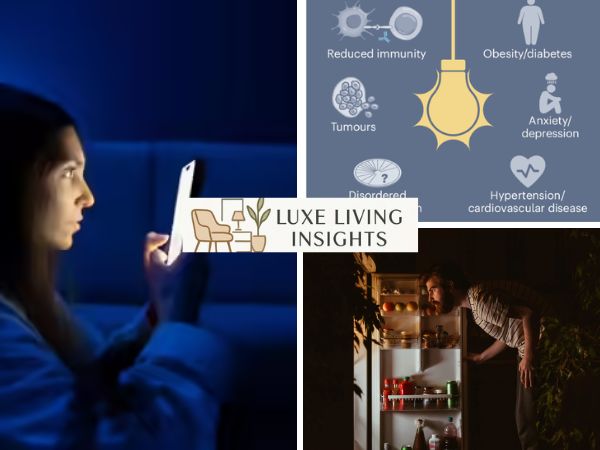
However, the nighttime light we expose ourselves to can be a hidden danger. Exposure to blue-enriched light in the evening—from smartphones or cool LED bulbs—increases hunger by disrupting the suprachiasmatic nucleus in the hypothalamus.
When nighttime light disrupts circadian rhythm, the body fails to produce enough melatonin and instead keeps ghrelin levels high. This leads to the common phenomenon where nighttime light increases ghrelin, causing late-night cravings and potential overeating.
Shaping Dining Experiences through Strategic Lighting Design
Designing a dining space is about more than aesthetics; it is about human-centric lighting. By understanding cross-modal correspondence, we know that lighting color affects how we perceive the sweetness or saltiness of a dish.
For instance, yellow lighting can make an apple seem sweeter and more desirable. If you are learning how to decorate your room with lights, focusing on these Kelvin variations is essential.
| Lighting Type | Kelvin (K) | Main Effect | Best Room Use |
|---|---|---|---|
| Warm White | 2700K | Increases Consumption | Dining Room |
| Neutral White | 4000K | Increases Freshness | Kitchen |
| Cool White | 6500K | Suppresses Hunger | Pantry/Gym |
In residential spaces, using 2700K warm white bulbs for pendant lighting creates a cozy dining ambiance that fosters positive emotional states. For more intimate settings, you might want to learn how to create sexy mood lighting at home using lower intensity warm lights.
In the kitchen, a neutral light of 4000K is better for food preparation, as it provides enough clarity to judge the doneness of meat without the harshness of cooler tones.
Measuring the Subconscious Response to Lighting
Modern science now uses Generalized Facial Expression Recognition (GFER) to prove these effects. Unlike subjective surveys where people might misremember their feelings, GFER analyzes subconscious reaction by tracking micro-movements in facial muscles using the Facial Action Coding System (FACS).
The CLIP model is used in these studies to extract facial features and separate them from the environment. This ensures that when we say 2700K light triggers positive emotion, it is based on implicit measurement rather than just a guess.
Researchers also use eye-tracking to see where visual attention lands. Food color affects visual fixation, and under the right light, your eyes will stay locked on the most nutritious or appealing parts of your meal.
Quick Tips: How to Use Lighting to Control Your Appetite
-
Use warm light (2700K–3000K) in dining areas to make meals more enjoyable
-
Avoid bright, cool light at night if you tend to snack late
-
Get natural sunlight in the morning to regulate hunger hormones
-
Use dim lighting in the evening to reduce unnecessary eating
Practical Recommendations for Managing Diet via Illumination
To control late-night snacking, consider swapping your kitchen bulbs for warmer tones or dimmable LEDs. You can also explore floor lamp ideas for bedroom lighting to create a soft, warm environment that signals the body to prepare for rest.
Avoid bright, blue-tinted lights in the evening to prevent the hormonal spike that leads to binging. Instead, maximize exposure to natural daylight during the morning to keep your metabolic functions in check.
Be mindful of the dual risk of lighting. Some energy-saving lights can make undercooked meat appear fully cooked, hiding potential food safety risks. Always ensure your food preparation area has high color rendering to see the true state of your ingredients.
FAQ about Lighting and Appetite
How does blue light specifically influence the amount of food consumed?
Blue light acts as an appetite suppressant because the color is rare in natural, unprocessed foods. Studies from the National Institutes of Health show that blue lighting significantly decreases the amount of food consumed, especially in men. It often evokes a sad emotional response, reducing the overall desire to eat.
Can the temperature of light affect how fresh food looks?
Yes. Warm lighting between 2700K and 4200K creates a cozy atmosphere and enhances the appearance of food, making it look fresher and more appealing. Conversely, cool white light of 6500K can make food appear dull or uninviting, which inhibits consumption.
Why do many restaurants use red and yellow lighting in their dining areas?
Red and yellow lighting are known to stimulate appetite and hunger. These colors increase energy levels and physiological arousal, which increases food consumption. This is a common restaurant lighting strategy to enhance the customer’s willingness to order more.
What is the relationship between morning light and body weight?
Exposure to bright light in the morning helps regulate appetite-controlling hormones like leptin and ghrelin. According to research in PubMed Central, this morning exposure can help reduce body fat and normalize the circadian rhythm, preventing metabolic disruptions.