
Can you wire 3 pendant lights to one junction box?
Yes, you can — as long as the total electrical load stays within the circuit limit and the wiring is done using a parallel connection. If you’re not experienced with electrical work, it’s safest to hire a licensed electrician to ensure everything meets code requirements.
Mastering the art of wiring multiple pendant lights into a single junction box transforms your home. This guide explores step-by-step wiring, multi-pendant canopy selection, and safety tips to ensure your 3 pendants look and function perfectly over your kitchen island or dining table.
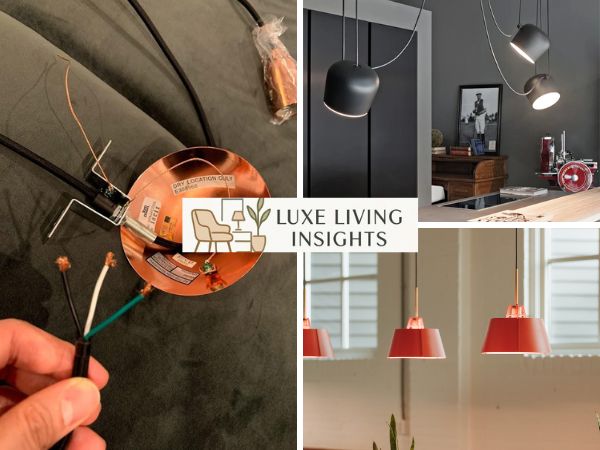
Step-by-Step Guide to Wiring 3 Pendants into a Single Junction Box
Quick overview:
-
Turn off power at the breaker
-
Install a ceiling box rated for multiple fixtures
-
Run wires from each light into the box
-
Connect wires in parallel using wire nuts
-
Secure the canopy and test the lights
Hanging a cluster of lights involves more than just aesthetics; it requires a solid understanding of electrical wiring. To start, the electrician installs junction box directly into a ceiling joist. This ensures the junction box, typically made of metal/plastic, can support the weight of multiple handmade glass pendants.
Before you begin, always remember that a voltage tester checks current to confirm the power is off. Safety is the foundation of any multi-pendant light installation guide.
If you are still in the planning phase and deciding how many pendant lights over a 5 foot island are necessary, knowing the technical limits of your junction box is key. Once the area is safe, the installer strips wire using a professional wire stripper. The wiring follows diagram standards to ensure a clean circuit connection.
In a 3 pendants setup, you will likely use a parallel wiring for ceiling lights method. This means you are connecting multiple light fixtures to one power source so that if one bulb fails, the others remain lit. Parallel wiring ensures constant voltage across the entire pendant light clusters.
To manage the wires, you will use a pigtail connection. A pigtail combines wires by taking the three hot and neutral wires from the pendants and joining them with a single lead that connects to the main house wire. The wire nut joins copper wires securely inside the electrical box.
Ensure the junction box houses wiring without overcrowding, as the National Electrical Code (NEC) regulates the volume of conductors allowed in a single box. Using pigtail connection methods is the traditional and straightforward way to achieve functional lighting while maintaining a clean look.
| Component | Attribute | Value |
|---|---|---|
| Junction Box | Material | Metal/Plastic |
| Electrical Wire | Color | Black (Hot) |
| Electrical Wire | Color | White (Neutral) |
| Electrical Wire | Color | Green/Bare (Ground) |
| Connection | Method | Parallel |
Finally, the neutral wire completes circuit while the switch interrupts hot wire to control the flow. As the user wires pendants, keep the copper conductors tidy. Use electrical tape only as a secondary reinforcement; the wire nuts must do the heavy lifting. This straightforward method ensures that each pendant light comes with a canopy that fits perfectly.
Common mistakes to avoid:
- Overfilling the ceiling box (can violate electrical code)
- Using the wrong wire size
- Skipping the ground wire
- Leaving loose wire connections
- Forgetting to turn off power before starting
Selecting and Installing the Right Multi-Pendant Canopy
A multi-pendant canopy is the most streamlined and cost-effective way to achieve a grouped lighting electrical setup. This specialized ceiling mount allows you to consolidate multiple cords into a single exit point. The multi-pendant canopy covers junction box completely, providing a polished look.
Most high-quality kits, like a 5-inch luxe canopy, include a mounting bracket that supports canopy weight and keeps it flush against the ceiling. This luxe canopy ensures a clean look that complements all of our handmade modern glass pendant lights.

When selecting your hardware, consider the shape of your furniture. Linear designs work wonders for long kitchen islands, while circular or pack configurations suit round dining tables.
If you are wondering what size pendant light for living room or foyer spaces is appropriate, a multi-light canopy with a capacity for 3 pendants usually features a terminal block inside to simplify the daisy chaining pendant lights process. Cord lengths can be cut onsite to achieve a unified lighting arrangement.
Installation steps for the canopy:
- Secure the mounting bracket to the standard j-box using mounting screws.
- Thread each pendant cord through the strain relief or cord grip.
- The cord grip secures pendant cord at your desired height.
- Adjust the cord lengths to create impactful lighting designs.
- The pendant cord connects to canopy wiring before the canopy hides box.
As you tighten the hardware, ensure the screws tighten bracket firmly. A loose canopy can lead to voltage drop or physical instability.
Using UL listed fixtures ensures that the canopy and pendant socket meet rigorous safety standards for alternating current systems. This approach minimizes the number of junction boxes required, making it a visually distinct arrangement of pendants.
Is it safe to wire multiple pendant lights to one box?
Yes — but only if the box is rated for multiple fixtures and the total wattage stays within the circuit limit. If the box feels crowded or the wiring seems complex, it’s best to stop and consult an electrician.
Calculating Electrical Load and Safety Requirements
Safety in how to wire multiple lights to one switch depends on math. You must ensure the circuit supports load without tripping the circuit breaker panel. A standard room circuit usually handles 120V and has a specific amperage capacity. To find your voltage load, add the wattage of all three bulbs.
For example, if each incandescent bulb is 60 watts, your total is 180 watts. Even for handmade glass pendants like Stamen in Crystal or Solitaire in Crystal, staying under the wattage limit is critical.
To stay well under the wattage limit, we recommend that the LED bulb fits socket. An LED uses significantly fewer watts while providing the same lumens. Because electricity flows through circuit lines, keeping the heat low prevents damage to the pendant cord insulation.
The circuit breaker protects electrical line from surges, but proper DIY habits are your first line of defense. Always consult a qualified electrician who can safely handle the wiring and placement.
| Electrical Entity | Attribute | Value |
|---|---|---|
| Circuit | Voltage | 120V |
| Wire | Gauge | 14 AWG |
| Light Bulb | Tech | LED |
| Load | Unit | Watts |
System requires grounding to prevent electrical shocks. The ground wire attaches to ground screw inside the junction box. This creates a safe path for electricity if a fault occurs. Never skip this step.
Using the correct wire gauge, such as 14 AWG for a 15-amp circuit, ensures the 120V source powers lighting cluster efficiently. Proper installation instructions suggest that copper conductors must be handcrafted into their terminal block positions.
Alternative Solutions for Multi-Light Arrangements
If you lack a multi-pendant canopy, track lighting offers a flexible alternative for hanging multiple pendant lights. Our pendant lights are compatible with Halo, Juno, and Lightolier systems. In this setup, the track head allows you to position lights anywhere along the conduit.
This is particularly advantageous in spaces for adjustable lighting and dynamic arrangements, allowing for personalized illumination tailored to specific needs.
Following the pendant light over kitchen sink height 30-36 rule is just as important in cluster lighting. For those who want a modern touch, a dimmer switch adjusts brightness and mood. The dimmer switch must be compatible with your LED driver to prevent flickering.

Whether you choose a linear canopy or a track system, the goal is to create impactful lighting designs that blend practicality and style. Using a canopy simplifies the installation process and allows you to group multiple pendants under a single canopy easily.
Remember that the pendant hangs from ceiling height should be roughly 30 to 36 inches above a surface. This light zoning defines the space with elegance and style.
If you are unsure about the electrical wiring, always consult a professional electrician to handle the wiring multiple pendant lights task safely. This ensures functional lighting and can serve as a decorative element.
Essential Tools and Materials for the Project
To achieve a professional result, gather the right tools before you start. The user needs a wire stripper to expose the copper conductors and mounting screws to anchor the fixture. A voltage tester is non-negotiable for verifying that the switch interrupts hot wire before you touch any metal parts.
This modern organic approach to DIY requires material integrity and sustainability in every component used.
| Tool/Material | Purpose |
|---|---|
| Wire Nut | Joins multiple wires |
| Voltage Tester | Checks for live current |
| Wire Stripper | Removes insulation |
| 14/2 Romex | Standard electrical wire |
| E26 Base | Common pendant socket |
Once the screws tighten bracket and the canopy is in place, the bulb emits light, signaling a successful project. High-quality handmade glass shades paired with fabric cord provide a modern organic or Japandi aesthetic. This simplistic, timeless design ensures your lighting lasts for years.
Discover how these three favorite methods can transform your living spaces into showcases of modern design and craftsmanship.
Frequently Asked Questions about Wiring Multiple Pendant Lights
What is the best method for hanging multiple pendant lights in a kitchen?
The most traditional and straightforward method is using individual junction boxes for each light, providing a visually distinct arrangement.
However, for a more streamlined and cost-effective look, a multi-pendant canopy allows you to group several lights into a single electrical box. This approach minimizes the number of junction boxes required and simplifies the wiring process.
Can I install track lighting for my pendant lights myself?
Track lighting offers excellent flexibility and allows you to position pendants anywhere along the track grooves. While it is a versatile solution, the installation of track lighting requires coordination with a qualified electrician.
They can advise on the best placement and wiring options to ensure the system is safe and functional for personalized illumination.
How do multi-pendant canopies simplify the installation process?
A multi-pendant canopy consolidates multiple pendant lights into a single electrical junction box. This approach reduces installation complexity and potentially lowers costs associated with hiring an electrician.
Our range of multi-pendant canopies includes Pack, Circular, and Linear designs, accommodating two, three, four, or more pendants depending on your configuration.
Are all pendant lights compatible with track systems?
Many modern pendant lights are designed to be compatible with popular track systems such as Halo, Juno, and Lightolier. This provides the freedom to position pendants anywhere along the track grooves.
It is essential to ensure that your specific fixture is compatible with the chosen track system for a dynamic lighting arrangement tailored to your needs.