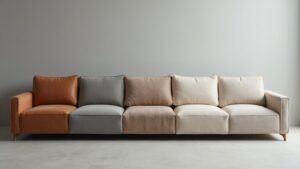
Quick Answer: What Sofa Foam Density Should You Choose?
- Everyday use: 2.0–2.5 PCF
- Heavy use / families: 2.5+ PCF (High-Resiliency foam)
- Light use / decorative: 1.5–1.8 PCF
- Best comfort setup: HR foam core + soft top layer
In simple terms: higher density = longer-lasting sofa, not necessarily firmer.
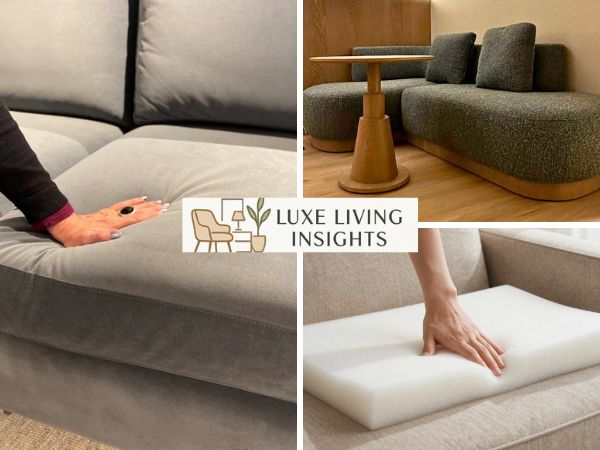
The Essential sofa foam density guide: Why It Matters More Than Firmness
When you shop for a new sofa, your first instinct is likely to sit down and test how it feels. However, there is a hidden technicality that dictates whether that comfort lasts ten years or ten months: foam density.
In the furniture world, density is quality, not firmness. While firmness refers to the immediate sensation of resistance, foam density represents the quality and durability of the foam.
Technically, density is the weight per cubic foot of a foam block, measured in pounds per cubic foot (PCF). High-density foam means more material is packed into the foam, which prevents the cell structure from collapsing under repeated use.
It is a common misconception that high-density foam must be hard. In reality, density and firmness are two separate things; you can have a high-density foam that offers a plush, sinking feel while maintaining incredible tensile strength.
| Metric | Attribute | Value |
|---|---|---|
| Foam Quality | Primary Factor | Density |
| Foam Comfort | Primary Factor | Firmness (ILD) |
| High-Density Foam | Lifespan | 10+ years |
| Low-Density Foam | Lifespan | 2-3 years |
High-Resiliency (HR) vs. Polyurethane Foam: Understanding the Quality Gap
The debate between High-Resiliency (HR) foam and Polyurethane (PU) foam is essentially a comparison of structural support layers. Polyurethane foam is a standard upholstery material found in most residential furniture.
The industry average for Polyurethane foam is 1.8 lb/ft³. While functional, this low-density foam often degrades within 2 years of heavy use, leading to cushion sagging.

On the other hand, High-Resiliency foam surpasses standard Poly durability. To qualify for the HR label, HR foam has a minimum density of 2.5 lb/ft³. This material features an open-cell structure that is highly consistent, allowing it to act like a collection of millions of tiny springs.
HR foam holds its shape longer because it has a high response rate, meaning it returns to its original structure almost instantly after you stand up. While Poly foam is used in residential mid-tier sofas, High-Resiliency foam is usually found in top-tier quality sofas due to its elasticity levels and compression modulus.
How to Choose the Right Foam Density (Based on Your Needs)
If you’re unsure what to pick, here’s a simple guide:
- Want a sofa that lasts 10+ years → choose 2.5 PCF or higher
- Prefer a soft, plush feel → look for lower IFD (20–30)
- Have kids or pets → go with high-resiliency foam
- Buying for occasional use → 1.8–2.0 PCF is enough
Think of density as durability, and firmness as comfort.
How to Choose the Right Density Based on Your Household Usage
Your lifestyle should dictate your sofa foam density guide requirements. High usage requires high-density foam. For a family room where the sofa is the hub of activity, 2.5 lb/ft³ or higher is a mechanical necessity.
At this level, high-density foam lasts 10+ years because it resists the compression set caused by daily weight. This is particularly important when selecting luxury design sofas intended for heavy use.
Conversely, low usage areas like a guest room or formal parlor can utilize medium density (around 1.8 to 2.2 lb/ft³). This provides a cost-effective solution without sacrificing the immediate aesthetic. If you are looking at commercial seating, such as in a restaurant or lobby, the density should be 3.0 lb/ft³+ to handle constant turnover.
- High Usage: 2.4 lb/ft³+ (10+ years lifespan)
- Medium Usage: 1.8 – 2.2 lb/ft³ (5-7 years lifespan)
- Decorative/Low Usage: 1.5 lb/ft³ (2-3 years lifespan)
Real-Life Example:
- A busy family living room (kids + pets): foam below 2.0 PCF will likely sag within a few years
- A formal living room used occasionally: mid-density foam works fine
- Rental or Airbnb furniture: choose 3.0 PCF+ for durability
Matching foam density to real usage is more important than chasing luxury labels.
Optimal Density Specifications for Seat vs. Back Cushions
A sofa is a system of structural support. The seat cushions support body weight, making them the most critical component. For good quality, look for at least 2.0 lb/ft³, but for high-quality, long-lasting seating, the 2.5 to 3.0 lb/ft³ range is king. This standard is essential for modern luxury sofa designs for your livingroom to maintain their silhouette.
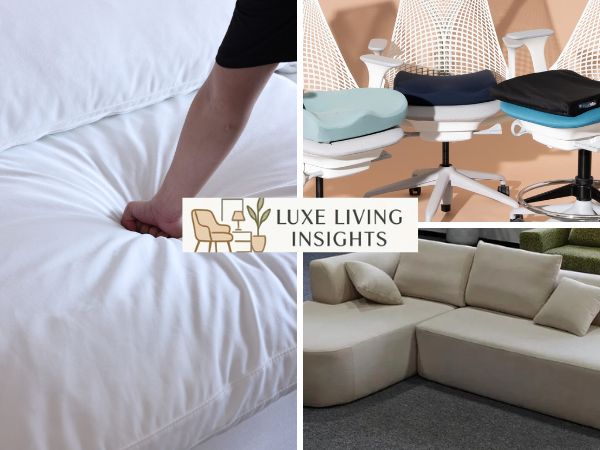
Back cushions require lower density (approx. 20-25 kg/m³) because they support significantly less weight. Manufacturers often use a multi-layer approach. They might use a high-density core for support and then top cushion cores with a layer of memory foam or soy-based foam.
Memory foam conforms to body shape, but it has a low response rate. By combining a High-Resiliency core with a viscoelastic topper, you get the best of both worlds: luxury seating standards and deep comfort.
Measuring Comfort and Support: The Role of IFD and ILD
While density equals quality, firmness is measured by IFD (Indentation Force Deflection). You might see a four-digit code on foam specifications, such as 2535. This is a semantic triple where:
- The first two digits (25) represent the density (2.5 lb/ft³).
- The last two digits (35) represent the IFD (35 lbs of pressure to compress the foam).
A mid-30s IFD is the sweet spot for balanced residential seating. If the IFD value is under 20, the foam is soft seating, perfect for back cushions. Higher numbers indicate a firmer feel. Remember, increased density extends sofa lifespan, but the IFD value defines the support level and feel.
Where to Find and Verify Foam Quality Before You Buy
Transparency is key to Google E-E-A-T standards in furniture shopping. Most retailers will have access to the foam density information if you ask. High-end brands like McElheran’s Furniture + Design or sources like Foam Superstore and FoamOnline often list these specs openly.
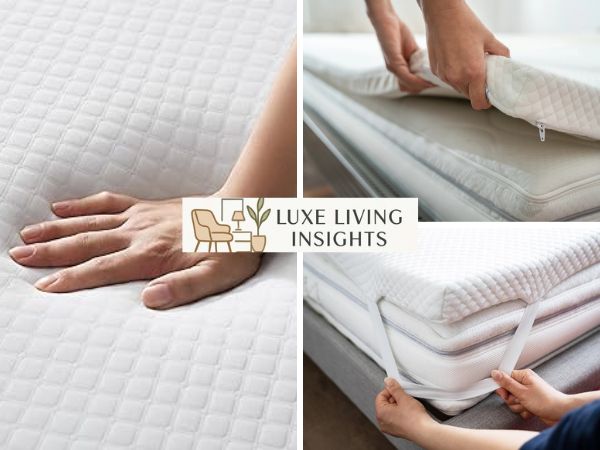
When looking for luxury l-shape sofa designs for your livingroom, always verify these metrics. Look for CertiPUR-US certifications, which ensure the foam is made without harmful chemicals and meets specific airflow permeability and tensile modulus standards.
Long-Term Maintenance: Extending the Life of Your Sofa Foam
Proper maintenance protects foam integrity. Even the best HR foam benefits from rotating cushions to distribute weight application evenly. This prevents localized foam degradation.
Sofa maintenance is a goal that helps extend lifespan, ensuring your investment piece remains as comfortable in year ten as it was on day one.
Sofa Foam Density Explained (Simple Summary)
- Density (PCF) = how long the sofa lasts
- IFD / ILD = how soft or firm it feels
- HR foam = best for durability and support
- Poly foam = budget option, shorter lifespan
Best overall choice for most homes: 2.0–2.5 PCF with balanced firmness
FAQs about Sofa Foam Density Guide
Does a higher foam density mean the sofa will feel harder?
No. Density is not firmness. Density refers to how much weight of material is packed into a cubic foot, which dictates durability. Firmness is measured by ILD or IFD.
It is possible to have high-density foam that is very soft or low-density foam that is very firm. Always check both numbers to ensure you get the quality and feel you desire.
How long should I expect a standard 1.8 PCF foam cushion to last?
In a typical residential setting with daily, heavy use, a 1.8 lb/ft³ (industry average) foam cushion will likely begin to sag or lose its original structure within 3 to 5 years. If you want a sofa to last 10+ years, you should aim for high-density foam with a rating of 2.4 lb/ft³ or higher.
Is soy-based foam better than polyurethane foam?
Soy-based foam is often marketed as an eco-friendly alternative, but the primary component is still polyurethane. Usually, only a small percentage of the chemicals are replaced with soy oil to reduce the environmental impact and off-gassing.
While it is a step toward sustainability, its density and quality are still measured by the same PCF standards as traditional foam.
Why do back cushions have a lower density than seat cushions?
Back cushions do not have to support the full body weight of a person. Because they experience less compression, they can use a lower density (around 1.5 to 1.8 lb/ft³) to achieve a plusher, more comfortable feel.
Using a high-density, high-IFD foam in a back cushion would likely feel too stiff and uncomfortable for most users.
Conclusion
Understanding the sofa foam density guide is the best way to ensure your furniture investment pays off. By prioritizing high-resiliency cores and appropriate IFD levels, you guarantee comfort that lasts. Visit luxelivinginsights at luxelivinginsights.com for more interior tips. Please leave a comment or share this guide if it helped you!