
Comparing Seat Heights: Why the Difference Between Counter and Bar Stools Matters
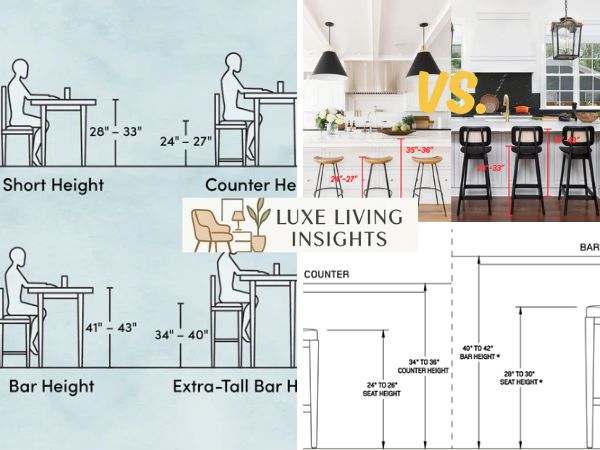
Choosing the wrong chair for your kitchen or entertainment area is a common design mistake that leads to daily discomfort. To avoid this, you must understand that the Counter Stool and the Bar Stool are built for two entirely different architectural standards. A Counter Height Stool typically features a Seat Height of 24–27 inches.
This specific dimension ensures the chair is designed for a 35–40 inch kitchen counter. Because most residential Kitchen Islands are built to a Standard Counter Height, these stools are the go-to choice for modern homes.
In contrast, a Bar Height Stool is significantly taller, with a Seat Height ranging from 28–33 inches. These stools are intended for an Elevated Bar or high-top table. A Standard Bar usually has a Surface Height of 41–43 inches.
Consequently, the Bar Height consistently exceeds the Counter Height by several inches. The primary difference between these two categories is a vertical gap of 6–10 inches. This gap is not merely aesthetic; it is a matter of functional Ergonomics.
The most critical factor for user comfort is the Leg Room. Experts recommend a 10–12 inch gap between the Seat Cushion and the bottom of the Tabletop Surface. This Comfortable Seating Gap allows for natural movement and prevents your legs from feeling pinned against the wood or stone.
If you ignore this 10-inch rule, you risk a cramped experience. A Counter Stool promotes a Casual Social Kitchen Environment, making it ideal for a Residential Design where the family gathers. Meanwhile, a Bar Stool is often the Best For an Elevated Kitchen Island or a Home Bar.
Using the best outdoor dining tables near me for your patio can also require similar height considerations if you are setting up a high-top outdoor dining area.
| Stool Type | Seat Height | Matching Surface Height | Best Use Case |
|---|---|---|---|
| Dining Stool | 16–23 inches | 28–33 inches | Breakfast Nook, Dining Table |
| Counter Stool | 24–27 inches | 35–40 inches | Kitchen Island, Workstation |
| Bar Stool | 28–33 inches | 41–43 inches | Pub Table, Built-in Bar |
| Tall Bar Stool | 36+ inches | 44+ inches | Commercial Use, Tavern |
How to Measure Your Counter or Bar for the Perfect Fit
Before you browse any Furniture Manufacturer catalog, you must take precise measurements. Measurement prevents purchase mistake scenarios that result in costly returns. Start by measuring from the floor to the top of your eating surface. This Kitchen Surface Height is the foundation for your calculation.
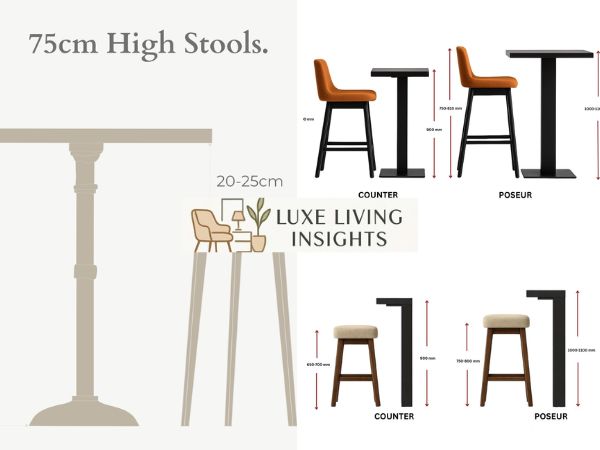
Once you have that number, use the subtraction method: Seat Height is measured from the floor, and you should subtract roughly 10 to 12 inches from your counter height to find the ideal chair.
Consider the Overhang of your Kitchen Countertop. A standard Kitchen Island usually has an Overhang that provides space for Stool Placement. Without enough depth, your knees will hit the cabinetry. Furthermore, you should measure from the floor to the bottom of the counter, not just the top.
If your counter has a thick apron or decorative trim, your Leg Room will be further restricted. An Easy Estimation is helpful, but a tape measure is your best friend here. If your surface is a non-standard height, an Adjustable Stool with a Gas Lift Mechanism is a brilliant solution. These chairs typically offer a Range of 24–32 inches, allowing them to replace a Fixed Stool in various settings.
Choosing the Right Stool for Your Space and Lifestyle
Counter Stools for Kitchen Islands and Daily Tasks
The Counter Height Stool is the workhorse of the modern home. Because the Counter Stool promotes Social Interaction, it is perfect for a Home Workspace where you might answer emails or for children doing homework. The lower profile makes these stools more Residential Design friendly, as they don’t block the line of sight across a room.
This type of seating Suits a Standard Kitchen Island perfectly, allowing the cook and the guest to engage at a similar eye level. If you are looking for quick ship dining tables for rapid delivery to complete your breakfast nook, you can find rapid delivery options here.
Bar Stools for Home Bars and Entertaining
A Bar Stool fits an Elevated Bar or a High-top Pub Table. One significant Advantage of these taller surfaces is that they help Hide Countertop Clutter, such as dirty dishes, from guests in an adjacent living room. These stools are the Answer for a dedicated Home Bar or a Tavern Table.
Because they are taller, a Bar Stool targets Adults, as Children and the Elderly may find them Heavy and Awkward to climb into. Pairing these with rattan ceiling pendant ideas for boho & coastal rooms can create a stunning coastal bar atmosphere.
Specialized Seating: Dining Stools and Extra-Tall Options
Not every stool is for a bar. Dining Stools with a Seat Height of 16–23 inches are designed to complement a Dining Table. These are excellent for a Small Breakfast Nook or a tight apartment where a Standard Dining Chair would take up too much room. On the other end of the spectrum, a Tall Bar Stool features a Seat Height of 36 inches or higher.
These are almost exclusively used for Commercial Grade applications where the surface is 44 inches or taller. If you are outfitting a restaurant, consider looking into the best commercial dining tables and chairs for your business to find durable commercial solutions.
For example, if you have a standard 36-inch kitchen island, most homeowners find that a 25-inch stool feels just right.
Anything taller can start to feel cramped after a few minutes.
Key Functional Features Beyond Height
When selecting furniture, the Primary Feature of a high-quality stool is often the Footrest. Because your feet won’t reach the floor, a Footrest provides leg support and supports user comfort. Without one, the dangling weight of your legs can cause significant lower back strain.

Additionally, a Swivel Mechanism enhances accessibility, allowing guests to turn and talk without dragging the chair across the floor. This is particularly important in Hospitality Furniture where movement is frequent.
You must also consider the Armrest. While they provide extra comfort, an Armrest limits the Stool Depth and decreases the Under-counter Clearance. If you choose a stool with arms, ensure they can still slide under the counter when not in use to save floor space.
The Material, whether Metal or Wood, also impacts the Visual Weight and durability of the piece. A Stool Height affects Posture, so prioritize ergonomic support over pure aesthetics when possible.
Common Pitfalls When Selecting Height-Specific Seating
The most common error is the Thigh-trap. This happens when a Bar Stool is used at a Standard Counter. Because the chair is too high, your Thighs are brought Too Close to the Surface, making it impossible to sit comfortably.
Conversely, using a Counter Stool at a tall bar leads to Reaching Strain. You will feel like a child sitting at the grown-ups’ table, struggling to reach your drink or plate. This Mistake Warning is the most important takeaway for new buyers.
Another pitfall is ignoring the Scale of the room. Tall Bar-height Stools can feel Heavy and Awkward in a small room with low ceilings. Always ensure the Interior Design dictates a Furniture Scale that feels balanced.
Using Dining Stools as a Substituted By for Dining Chairs can help save space, but using the wrong height for a counter will always result in a functional failure. Ensure you have the proper stool height for the counters before making a final purchase.
Solutions for Multi-Use Spaces and Non-Standard Heights
If your home features a variety of surface heights, Adjustable Height Stools are the ultimate flexible option. An Adjustable Stool offers Height Flexibility, often covering the 24–32 inch range. This allows one set of chairs to work at both the Kitchen Island and a Pub Table.

For those with Custom Counters that don’t fit the Standard Bar or Counter Height mold, these mechanical stools are a lifesaver. They ensure that no matter the architectural quirk, you can always maintain that perfect 10–12 inch gap for Leg Room. This versatility is Ideal For modern, multi-functional homes.
Frequently Asked Questions about Stool Heights
What is the ideal clearance between the seat and the counter?
To ensure optimal comfort and ergonomic posture, an individual should maintain a clearance of 10–12 inches between the top of the stool seat and the underside of the counter or table.
This specific gap facilitates sufficient Leg Room and allows for the natural movement of the thighs without obstruction from the furniture surface.
Can I use bar-height stools for a standard kitchen island?
It is generally not recommended to utilize Bar Height Stools for a Standard Kitchen Island. Since a standard island typically measures 35–40 inches in height, a stool with a seat height of 28–33 inches would position the user’s lower body too close to the countertop. This lack of clearance results in physical discomfort and restricted movement.
How do I choose between a swivel and a fixed stool?
The choice between a Swivel Stool and a fixed-base stool depends on the intended environment and accessibility requirements.
A Swivel Mechanism enhances accessibility by allowing the user to rotate 360 degrees, which is particularly beneficial in tight spaces or social settings where interaction occurs in multiple directions. Fixed stools, conversely, often provide a more stable and minimalist aesthetic.
Are tall bar stools suitable for residential use?
Tall Bar Stools, which feature a Seat Height of 36 inches or higher, are primarily engineered for Commercial Grade environments with surfaces exceeding 44 inches.
In a residential setting, these are only appropriate if the home features a custom, extra-high bar. For most standard homes, these stools will be excessively tall and functionally impractical.
Articles on the same topic:
-

Side Table Dimensions: Higher or Lower than Sofa?
-
How to organize your desk at home for peak productivity
-

How Much a Dining Room Set Costs in 2026
-

Choose the perfect dining table size and shape using simple measurements
-

Best Folding Dining Table and Chairs for Small Spaces: Picks, Sizes, and What to Buy
-

Dining Table Sizes for 6, 8, 10 & 12 People (in cm + inches)