Struggling with water rings? Learn how to get water stains out of fabric chairs using vinegar, baking soda, and pro tips, Safe for all cleaning codes (W, S, WS).
Quick Answer: The Most Effective Method
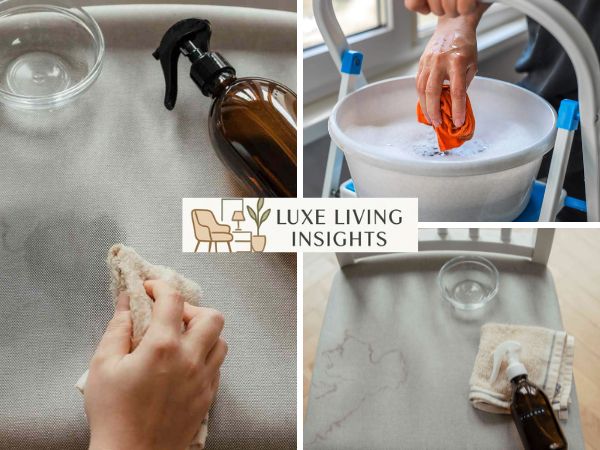
To get water stains out of fabric chairs, follow the Outside-In Blotting Technique. Mix 1 part white vinegar with 1 part distilled water. Lightly dampen a microfiber cloth with the solution and blot the stain starting from the outer edges toward the center to prevent secondary rings. For stubborn mineral deposits, sprinkle baking soda on the damp area, let it sit for 20 minutes to absorb deep-seated moisture, and vacuum. Crucial: Always use distilled water to avoid new mineral buildup.

The Science of “Water Rings”: Why Does Pure Water Stain?
It feels like a betrayal how can a clear liquid leave a brown or gray ring? In the world of textile science, this is known as “Soil Wicking” or “Cellulose Browning.” When water penetrates the fibers of your cream fabric dining chairs, it dissolves hidden dust, minerals (like calcium and magnesium), and even tannins from the chair’s internal frame. As the water evaporates, it carries these particles to the outer edge of the damp spot, depositing them in a concentrated “tide mark.”
To successfully remove these stains, we aren’t just “cleaning”; we are re-solubilizing those minerals and extracting them before they can re-settle.
Step 1: The Essential “Code” Check
Before you touch your Morgan fabric dining side chairs with any liquid, you must locate the upholstery tag. Attempting to clean an “S” code fabric with water will cause permanent fiber shrinkage or “water spotting” that cannot be reversed.
| Cleaning Code | Meaning | Safe Method |
|---|---|---|
| W | Water-Based | Safe for distilled water, vinegar, and mild soaps. |
| S | Solvent-Based | Dry-clean only. Use specialized upholstery solvents. |
| WS | Water or Solvent | Most versatile; can use both methods cautiously. |
| X | Vacuum Only | Do not use liquids. Professional cleaning is required. |
Decision Tree- Choosing Your Treatment Path
Use this logic to minimize “topic drift” and target the specific stain type:
- 📍 Is the fabric light-colored (Cream/White)? → Go to Method 1 (Vinegar + Distilled Water) to neutralize pH.
- 📍 Is the stain deep in the padding? → Focus on Method 2 (Baking Soda) to pull moisture upward.
- 📍 Does the chair have a metallic base? → Check metal frame upholstered dining chairs for rust-seepage; you may need Method 4.
- 📍 Is the stain “Old” or “Set-in”? → Try the Denture Tablet Hack for enzyme-based breakdown.
5 Expert-Approved Methods to Remove Water Stains
1. The pH-Balanced Vinegar Solution
Vinegar’s acetic acid is perfect for breaking down the alkaline mineral deposits found in hard water. This is the gold standard for dining chairs with cushion seats where surface rings are common.
- Mix 50% white distilled vinegar and 50% distilled water in a spray bottle.
- Mist the cloth, not the chair (to avoid over-saturation).
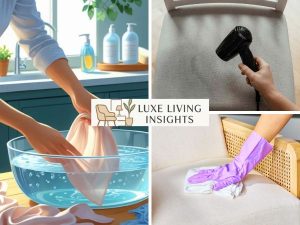
- Blot from the outside in. This “contains” the stain.
2. The Baking Soda “Desiccant” Extraction
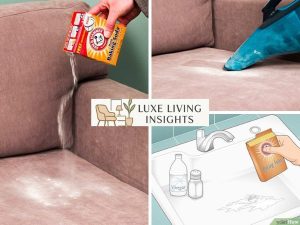
Baking soda acts as a physical vacuum. By layering it over a damp area, you create a Capillary Action that draws the dissolved dirt out of the fabric and into the powder.
3. Steam Dissolution (For Heavy Weave Fabrics)
If the water stain has hardened the fabric fibers, steam can relax them. Use a handheld steamer 2 inches away from the surface. Warning: High heat can damage synthetic fibers, so keep the steamer moving constantly.
4. The Denture Tablet “Hack”
Surprisingly, denture tablets are designed to remove mineral buildup and organic stains without harsh bleaching. Dissolve 2 tablets in 1 cup of warm distilled water. Spray lightly and blot. This is highly effective for aged stains on textured fabrics.
5. The “Cool-Blow” Technique
Evaporation speed matters. If a fabric stays damp for too long, a new ring will form. Use a hairdryer on the coolest setting. Direct the air at the edges of the damp spot, moving inward. This ensures the fibers dry uniformly.
Fabric Sensitivity & Drying Ratios
Not all chairs react to water equally. High-density fabrics require more patience and specific tools.
| Fabric Type | Absorbency Level | Recommended Tool | Avg. Drying Time |
|---|---|---|---|
| Linen / Cotton | High | Microfiber Cloth | 45 – 60 mins |
| Microfiber / Suede | Medium | Soft Suede Brush | 20 – 30 mins |
| Polyester / Nylon | Low | Sponge / Blotter | 15 – 20 mins |
Avoiding “Cellulose Browning”
“The biggest mistake homeowners make is using tap water to clean a water stain. You are essentially fighting fire with gasoline. The minerals in your tap water will simply create a larger, more permanent ring.” Upholstery Care Specialist, 2026.
To future-proof your home, consider investing in washable upholstered dining chairs. These are specifically engineered with hydrophobic barriers that prevent liquids from reaching the core fibers, making maintenance a 2-minute task rather than a weekend project.
FAQs
Why did my water stain turn brown after I tried to clean it?
- This is called Cellulose Browning. It occurs when natural fibers (like cotton or linen) stay wet for too long or are cleaned with a high-pH soap. To fix this, use a mild acidic solution like distilled vinegar to neutralize the pH and dry the area quickly with cool air.
Can I use dish soap to get water stains out of fabric?
- Yes, but only if the chair has a ‘W’ code. Mix 1 drop of clear dish soap with a cup of distilled water. Avoid colored soaps, as they can leave “dye transfer” stains on lighter fabrics like cream upholstery.
How do I remove water rings without using vinegar?
- If you dislike the smell of vinegar, use Rubbing Alcohol (Isopropyl) on a microfiber cloth. Alcohol evaporates much faster than water, which significantly reduces the risk of a new ring forming. (Best for Microfiber/Synthetic fabrics).
Is there a way to prevent water stains entirely?
- The best prevention is using a hydrophobic fabric protector spray or switching to washable upholstered dining chairs. These modern fabrics are treated to bead liquid on the surface, allowing you to wipe it away before it penetrates the fibers.
Conclusion: Removing water stains is a balance of chemistry and patience. By utilizing distilled water and neutralizing agents like vinegar, you can restore even the most delicate cream fabric chairs to their original glory. Ready to upgrade your space with easier-to-clean options?
Check out our guide to the best washable upholstered dining chairs of the year.