
Learning how to organize your desk at home is to remove everything, keep only essentials, and assign clear zones for work, storage, and accessories.
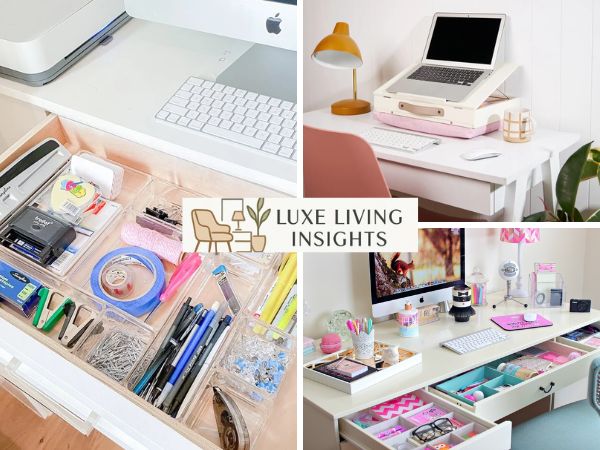
If your desk feels cluttered or distracting, this step-by-step guide will show you how to create a clean, productive workspace using simple, practical methods—no complicated systems required.
Step-by-Step how to organize your desk at home
Start by clearing everything off your desk. This helps you see exactly what you use daily and what’s just taking up space.
Next, sort items into three groups:
- Keep (daily essentials)
- Store (occasionally used)
- Remove (unnecessary clutter)
Whether your Desk Material is Wood or Metal, the goal remains the same: decluttering clears surface area for actual work.
To begin, you must understand that organization boosts productivity. Start by sorting every item. Your Office chair and Monitor are non-negotiable, but do you really need thirty pens? By applying the Marie Kondo method, you can decide what truly serves your daily tasks.
In this phase, user establishes cleaning routine protocols that prevent future messes. For those who lack a dedicated office, many find that dining room tables with style trending now can serve as an excellent temporary surface if managed with the same discipline.
We recommend carving up the surface area into specific desk zones. Imagine your desk as a map. The center is your Computer/Admin Zone, while the periphery handles secondary tasks. Designating different areas ensures that administrative tasks are less likely to infringe on creative ones.
For instance, keep your Keyboard and Mouse in the primary zone, while Reference materials sit in neat shallow piles to the side. If you prefer a minimalist desk style, your Workspace Aesthetic should be Minimalist. This isn’t just about looks; minimalism promotes focus by removing visual noise.
Position your Laptop at Eye level to ensure your Workspace Ergonomics are sound. Remember, Ergonomics prevents injury, and a well-placed Laptop riser improves ergonomics significantly. Below is a quick reference for your setup:
| Item | Organization Strategy | Benefit |
|---|---|---|
| Monitor | Place on a Monitor stand | Eye-level comfort |
| Paperwork | Use Document trays | Categorized flow |
| Small items | Place in Drawer dividers | Easy access |
Essential Storage Solutions to Maximize Desk Surface Area
When the desktop feels cramped, it is time to go vertical. Vertical storage is a lifesaver for small desk organization. By installing Floating shelves or a Pegboard above the desk, you move the clutter off the primary work surface.
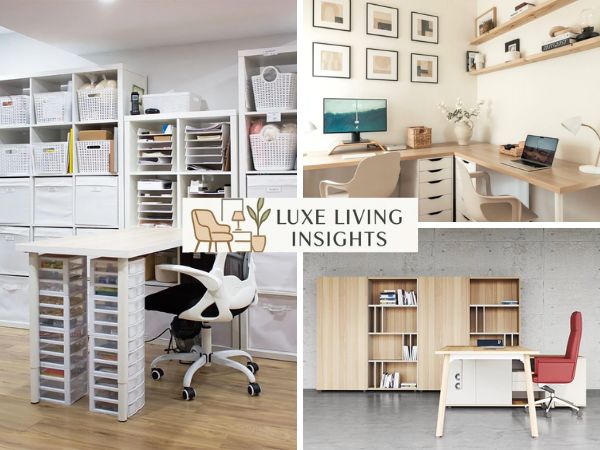
Shelves increase vertical storage, allowing you to keep Stationery items and Reference materials within reach but out of the way. A Pegboard holds tools like house scissors or a heavy tape dispenser effectively.
For items that must stay on the desk, use Desk storage solutions like Monitor stands. A Monitor stand creates storage space underneath for a Keyboard or a slim Notebook. If your desk has drawers, Drawer dividers are essential.
Whether the Drawer Divider Material is Acrylic or Bamboo, these tools ensure small items like paper clips don’t disappear. Drawer dividers organize small items so you never waste time hunting for a staple.
If you deal with physical mail, Document trays are your best friend. Stackable letter trays allow you to categorize incoming mail and active projects. Archive boxes are also vital for Office supply management.
Ensure each Archive Box Label reflects the Project Name. This way, Storage becomes a system rather than a hiding place. File cabinet stores archives, ensuring that your immediate Workspace remains a refuge for current thought.
Mastering Cable Management and Tech Integration
Nothing ruins a productive workspace faster than a nest of tangled wires. Cables cause visual chaos, which leads to mental distraction. Effective Cable management is the secret of workspace optimization.
Start by using Cable management boxes to conceal visual chaos.
Messy cables can quickly make your desk feel cluttered. Use cable clips, cable boxes, or adhesive ties to keep wires organized and out of sight.
This small change can dramatically improve how clean your workspace looks. Cable Box conceals Wires instantly, giving the desk a structure that feels design forward.
Use Cord organizers and Hidden cable boxes like the IKEA Signum. For individual strands, Cord clips or adhesive ties can guide a Charging cable to the desk edge. Cord clip secures charging cable, preventing it from slipping behind the furniture.
If you use a Power strip, ensure the Power Strip Capacity is at least 6-way to handle your Hardware. Remember, Power Strip powers Electronics, so keep it accessible but hidden.
Integrating your Hardware requires a strategy. While Phones and laptops are essential, they shouldn’t clutter the view. Use silver plated stands to hold an iPad at an angle. For bulkier items, clunky printers should be placed in a dedicated cabinet.
This keeps the surface clean for drawing and sketching. By moving toward a Digital and paper organization hybrid, you can Go digital. Archive preserves documents in a digital format, meaning you need fewer physical Filing cabinets.
Designing an Aesthetic and Inspiring Work Environment
Your desk should be a haven that sparks joy. Interior Design plays a massive role in how you feel while working. Natural and Task Lighting are the two pillars here. Always try to maximize natural daylight by placing your desk near a Window.
A Window supplies natural light, which boosts mood. For late hours, a Desk lamp with a Warm Light Temperature creates a calming atmosphere. Lighting reduces eye strain, especially if you use a classic Tolomeo by Artemide or a Jieldé table lamp.

To protect your Desk Material, use a Desk pad. Whether the Desk Pad Material is Felt or Leather, a Desk pad protects surface area from scratches. Furthermore, a Desk mat defines typing area, giving your Keyboard and Mouse a dedicated home.
To enhance the Aesthetic, you might consider incorporating elements from stunning beautiful dining tables and chairs for your home into your office furniture selection to maintain a cohesive look throughout your residence.
Personal touches with purpose make the space yours. A vintage brass table lamp or a porcelain cup for pens adds character. Furniture defines workspace, but your Decorative objects—like a yellow papier-mâché squirrel or a stone that looks like a skull—make it a refuge. Always aim for beautiful basics. Even a letter opener with a wavy handle can be a piece of art.
Maintaining Long-Term Order Through Daily Rituals
The best system fails without a routine. To maintain order, you must establish a ritual. Routine maintains order and signals to your brain that it is time to work. Start your day by making a cup of tea or lighting a candle. Incense can also ignite focus. This signifying habit tells your mind that the deep-work state has begun.
At the end of the day, perform an End of Day reset. Clear your desk surface entirely. Decluttering clears surface area for the next morning. Perform a Sticky Note Cleanse by removing old reminders.
Sticky note requires purging to prevent a loopy planning mess. If a task isn’t done, move it to your digital note taking app or a hardcover Japanese cotton paper notebook.
By following these 11 tips, you turn a chaotic table into a structured engine for success. Small desk solutions like Vertical storage and Monitor stands ensure that even the tiniest corner can become a professional Home office setup. Organization is not a one-time event; it is a healthy archive of habits that keep your mind and space clear.
Frequently Asked Questions
How can I maximize efficiency using zones?
Establishing specific areas for different tasks prevents mental friction and ensures that administrative duties do not interfere with creative work. You should designate a primary zone for your computer and secondary zones for reference materials or analog tasks.
This structured approach allows you to transition between different types of work with greater focus and clarity.
What are the best solutions for a small desk?
To optimize a limited workspace, you must utilize vertical space by installing floating shelves or pegboards. Employing a monitor stand creates additional storage underneath the screen for essential items.
Furthermore, adopting a minimalist mindset helps minimize the accumulation of unnecessary clutter, ensuring the primary surface remains functional for core tasks.
How should digital and paper organization be managed?
You should transition to digital note-taking and scan older documents to reduce physical paper clutter significantly. For active paperwork, employ stackable letter trays to categorize incoming mail and ongoing projects.
Maintaining a healthy archive in labeled boxes or digital folders ensures that your immediate workspace remains clear of distracting materials.
Articles on the same topic:
-

Choose the perfect dining table size and shape using simple measurements
-

Best Folding Dining Table and Chairs for Small Spaces: Picks, Sizes, and What to Buy
-

Dining Table Sizes for 6, 8, 10 & 12 People (in cm + inches)
-

Feng Shui Desk Placement for a Productive Home Office (2026)
-

10 Best Outdoor Dining Tables Near Me for Your Patio
-

Top 10 Dining Tables in Dubai for All Styles