

Quick Answer:
To remove water stains from a fabric couch, lightly spray a mix of equal parts white vinegar and distilled water, blot gently with a microfiber cloth, then dry quickly using a fan or cool air. Avoid soaking the fabric to prevent new water rings.
How to Remove Water Stains from a Fabric Couch (Step-by-Step)
Restoring your furniture starts with understanding the basic mechanical laws of upholstery cleaning.
Most people make the mistake of scrubbing vigorously when they see a mark. However, the most important rule is to blot, don’t rub.
Why is this the case? Rubbing spreads the moisture and leads to permanent fiber damage. When you apply a blotting technique, you are using a pressing action to lift the liquid. As a User, you must blot the stain with a microfiber cloth that has a soft/non-abrasive texture.
To begin the process, you need to prepare a cleaning solution. In a spray bottle, create a 50/50 ratio mix. This cleaning solution should consist of white distilled vinegar and distilled water. Vinegar neutralizes the mineral deposits that are the root cause of the problem.
When you spray, allow the cleaning solution to penetrate the fabric. You want the mist application to be light. Do not soak the area, as moisture that reaches the saturated padding can lead to internal mold. This is especially true for stunning luxury fabric corner sofas, where deep cushions can trap liquid.
Once the solution is applied, the acetic acid begins to work. This acid breaks the molecular bonds of the minerals. After letting it sit for about 15 minutes, it is time to blot and rinse. Take a second cloth dampened only with distilled water (which has a mineral content of zero) and dab the area.
This distilled water rinses any soap residue or vinegar left behind. A clean rinse removes the vinegar smell and prevents the area from becoming a magnet for new dirt.
If you were dealing with a different material, you might be looking for how to get smells out of a leather couch, but for fabric, the rinse is your best friend.
The final step is the most critical: the dry-down. Airflow dries the upholstery and stops the formation of new evaporation marks. You can use a hairdryer on a cool temperature setting or set a fan to a high speed nearby.
The faster the water evaporates from the surface, the less time it has to leave a new ring. This proactive fabric sofa maintenance ensures your upholstery, currently in a stained condition, returns to its original glory.
Why Water Leaves Marks on Your Upholstery
It feels like a paradox: how can clean water leave a dirty stain? The answer lies in the hard water minerals present in tap water. Tap water has high impurities like calcium carbonate.
When you spill a glass of water, the liquid carries these minerals deep into the textile care layers. As the moisture begins to dry, evaporation occurs from the center outward.
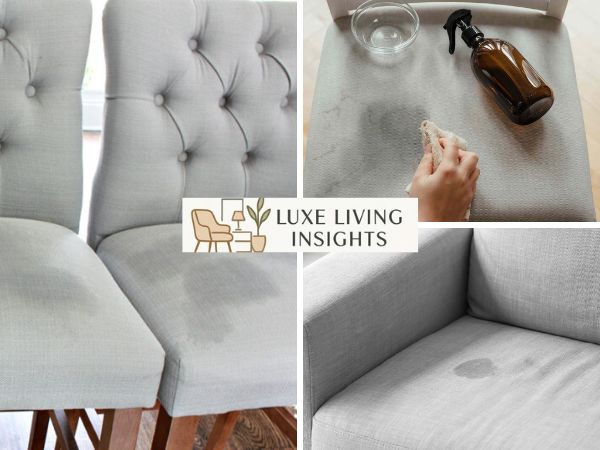
This creates a phenomenon known as capillary action. The liquid wicks toward the edges, carrying calcium and sodium lauryl sulfate (if soap was present) to the perimeter.
When the process is finished, minerals form the visible water rings. These mineral deposits are essentially the ghost of the water that has vanished. To keep designer fabric sofas to enhance your home looking their best, you must understand these chemical reactions.
Furthermore, surface tension plays a role. In many synthetic fibers, the water does not soak in immediately. Instead, it sits on the surface and traps airborne dust and debris.
By the time you notice the spill, the water spill has already created a blemish. This is why a vacuum cleaner is a vital tool; it extracts dust before you ever introduce moisture.
Essential Tools and Materials for Success
To achieve professional furniture stain removal, you must assemble the correct toolkit. Using the wrong items can lead to discoloration or fiber damage. High-quality tools are essential for maintaining stunning luxury design sofas for your home.
| Entity | Attribute | Value |
|---|---|---|
| White Vinegar | Acidity | High |
| Distilled Water | Mineral Content | Zero |
| Dish Soap | Type | Mild/Gentle |
| Hairdryer | Temperature | Cool |
| Microfiber Cloth | Texture | Soft/Non-abrasive |
| Fabric Couch | Material | Upholstery |
Your white cloth prevents any color transfer from the rag to the couch. Many people use dyed sponges, but the solvent in the cleaner can bleed that dye onto your polyester blend sofa.
Always use a microfiber cloth because it absorbs the cleaning solution more efficiently than cotton. Additionally, keep a garment steamer nearby for specialized textiles that require heat to relax the weave.
Advanced Tactics for Stubborn or Old Water Marks
Sometimes a simple DIY upholstery cleaner isn’t enough for an old, set-in watermark. For these cases, you might need to use a steam iron on a low setting. The steam loosens the fabric fibers, making it easier for the solvent to work.
However, you must first perform a hidden spot test. This testing avoids a disaster if the fabric is not heat-resistant. The hidden spot serves the purpose of ensuring the pH balance of your cleaner won’t ruin the dye.

If the water stain has a ring-like shape that refuses to budge, try an upholstery shampoo or foam cleaners. These products use a surfactant to break the surface tension of the stain. The soap emulsifies the dirt trapped within the water ring.
After applying the foam, use a suction extraction tool or a dry vacuum to pull the moisture out. Remember, technique determines your success. If you apply too much pressure, you risk pushing the mineral deposit deeper into the porosity of the cushions.
How to Prevent Future Water Stains and Fabric Damage
The best way to handle a water spot treatment is to prevent it from happening. A fabric protector spray provides a significant benefit by offering stain resistance. This protector coats each individual thread of the upholstery.
When a spill occurs, the liquid beads up on the surface. This fabric protector effectively shields the upholstery from deep penetration.
You should also practice immediate moisture management. When a spill happens, a cloth wicks the liquid away if you act within seconds. Do not let it sit.
Over time, even the best-protected fabric couch will succumb to moisture if it is left to linger. Regular vacuuming also keeps the debris removal consistent, ensuring there is no mud to form when water hits the surface.
When to Call a Professional Upholstery Cleaner
There are moments when how to get water stains out of fabric couch becomes a job for the experts. If you have a couch with a S (Solvent only) or X (Vacuum only) cleaning code, water-based solutions will ruin it. Professional service providers have the tools for deep cleaning that go beyond the surface.

If the stain has reached the saturated padding, a simple blotting action won’t be enough. Professionals use high-powered suction extraction to remove moisture from the core of the furniture.
If you notice a lingering smell or if the water rings keep returning after you clean them, it usually means the minerals are trapped deep inside. At this point, the upholstery cleaner needs to be industrial-strength to ensure the textile is fully restored.
Frequently Asked Questions
What is the most effective way to remove a water ring from a sofa?
The most effective method involves using a mixture of equal parts white distilled vinegar and distilled water. You should lightly mist the stained area and then use a clean microfiber cloth to blot the spot, moving from the outside of the ring toward the center. This technique prevents the minerals from spreading further into the fabric.
Why should I avoid using tap water when cleaning upholstery?
Tap water contains various minerals such as calcium and magnesium. As the water evaporates from the fabric, these minerals stay behind and create new water marks or rings. Distilled water is a necessary alternative because its mineral-free composition ensures that no new deposits are formed during the cleaning or rinsing process.
Is it safe to use a hairdryer on a fabric couch?
A hairdryer is safe to use as long as it is set to a cool or low-heat setting. High heat can cause synthetic fibers to melt or shrink, leading to permanent structural damage to the upholstery. Rapidly drying the area with cool air helps prevent the capillary action that typically causes water rings to form.
How can I tell if a cleaning solution will damage my couch?
You must always perform a test on a hidden area of the furniture before applying any solution to the visible stain. Apply a small amount of the vinegar and water mix to an inconspicuous spot and wait for it to dry completely. If there is no change in color or texture, the solution is safe to use on the rest of the couch.
Articles on the same topic:
-
Will It Fit? How to Measure Your Furniture for Tight Stairs and Corners
-

How Long Is a Loveseat in Inches?
-
How to Get Water Stains Out of Fabric Chairs
-

Pendant Light Over Kitchen Sink Height
-

How Much Does It Cost to Install 4 Recessed Lights? (2026 Price Guide)
-

How Many Pendant Lights Over a 9-Foot Island? The Designer’s Sizing & Spacing Guide