
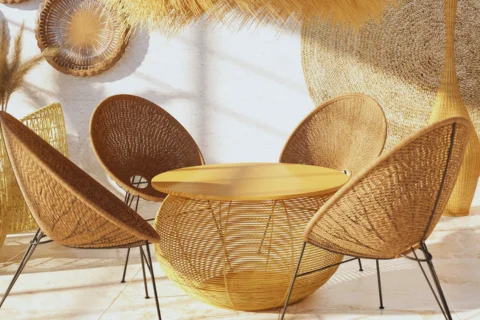
If you’re searching “wicker vs rattan vs cane,” you’re usually trying to solve one main problem: what these terms actually mean and which one is best for furniture you’ll live with every day. The simplest answer is this: wicker is typically a weaving technique, while rattan and cane are materials (with cane commonly made from rattan).
Next, once you understand the definitions, the second question becomes practical: how do you identify them by sight? Many products are labeled “wicker” even when the more important detail is the frame material (rattan) or the panel material (cane webbing).
Besides terminology, most people also want a real life comparison: which is more durable, which works outdoors (especially in sunny, coastal, or dry climates), and which is easiest to maintain. Durability depends on both material and construction and we’ll break down both clearly.
To start, we’ll define wicker, rattan, and cane in plain English, then move step by step into identification, durability, indoor/outdoor suitability (including California style sun and coastal notes), style and budget selection, and maintenance. After that, we’ll cross a contextual border into advanced buyer topics like PE rattan, quality checklists, and repairability.
What are wicker, rattan, and cane and why do people confuse them?
Wicker is primarily a construction/weaving technique, while rattan is a natural plant material used for frames and weaving, and cane commonly refers to thin strips from rattan used for webbing .
In other words, it helps to separate “how something is made” from “what it is made of.” Wicker describes the method the weaving while rattan and cane describe the material (and which part of the plant is used).
Why confusion happens in real shopping:
- Marketing labels blur terms: A “wicker chair” can be made from rattan, willow, bamboo, reed, or synthetic resin.
- Similar visual texture: Cane webbing and wicker weaving can look related because both are woven patterns.
- “Wicker” is used as a style word: Many shoppers mean “that woven, airy look,” not a technical definition.
Evidence: According to the University of Nebraska Lincoln Extension (1989), wicker is described as a construction technique rather than one single material, which is why the same “wicker look” can come from multiple fibers.
Is wicker a material or a weaving technique?
No wicker is not a single material, because (1) it describes a weaving/construction method, (2) it can be made from many materials (rattan, willow, bamboo, resin), and (3) the same “wicker look” can appear in both natural and synthetic versions.
So wicker tells you what the surface looks like and how it’s built, but it doesn’t automatically tell you how it will perform outdoors, how strong it is, or how it will age. Next, you’ll learn how to decode wicker listings quickly.
- Natural wicker: Woven from plant fibers (often rattan, reed, willow, or bamboo).
- Synthetic wicker: Woven from resin/plastic strands designed to mimic natural fibers.
- Shopping tip: If a listing only says “wicker,” look for frame material (aluminum vs steel vs wood) and strand material (natural fiber vs resin).
Is cane the same thing as rattan?
No cane is not the same as rattan, because (1) cane commonly refers to thin outer strips used for webbing, (2) rattan also includes thicker poles used for frames, and (3) cane webbing behaves differently (it can loosen or sag) than structural rattan frames under long term seating.
In practical terms, many “cane chairs” are wood or rattan frames with cane webbing panels in the back, sides, or doors. Cane is often chosen because it looks light and breathable, not because it is the strongest structural material.
How can you tell wicker vs rattan vs cane by looking at furniture?
You can tell them apart by checking structure (frame vs panel), thickness (poles vs strips), and pattern (cane webbing’s recognizable grid), then confirming whether the woven surface is natural fiber or resin .
This matters because “what it is” often predicts “how it performs.” Use this quick visual system: start at the frame, then examine the infill, then check the finish and feel.

What does rattan look like when it’s used as a frame?
Rattan frames usually look like smooth, rounded poles that form the chair’s skeleton, because rattan is strong and flexible enough for curved arms, loops, and continuous lines and it often shows wrapped joints where pieces connect .
- Rounded poles: Thicker than webbing, forming legs, arms, and the back outline.
- Wrapped joints: Thin rattan peel wrapped at corners for reinforcement and decoration.
- Warm natural tone: Often golden to caramel unless painted or stained.
What does cane webbing look like on chairs and cabinets?
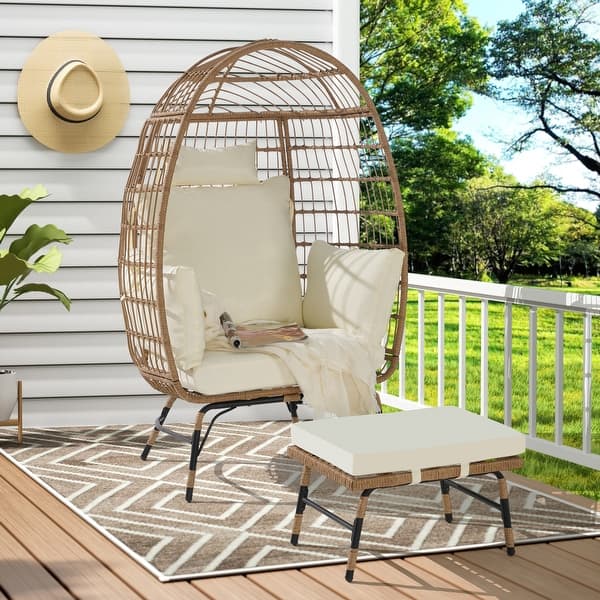
Cane webbing typically looks like a repeating open lattice (often a honeycomb like pattern) stretched inside a frame, because cane is commonly used as an inset panel that feels airy and light while still providing support .
- Chair backs: Breathable and visually light.
- Cabinet doors: Adds texture and reduces visual bulk.
- Chair sides: Decorative panels inside a wood or rattan frame.

What does “wicker” look like across different materials?
There are two main wicker categories: natural wicker and synthetic resin wicker, classified by the material being woven because the weave may look similar, but durability and weather resistance can be very different .
- Natural wicker: More matte and fibrous; may show tiny splits or irregularities.
- Synthetic wicker: More uniform strands; often slightly glossy and consistent in color.
- Outdoor clue: If the label says “all weather wicker,” “resin wicker,” or “PE rattan,” it’s usually synthetic.
Which is more durable: wicker vs rattan vs cane?
Rattan usually wins on structural durability, cane excels for lightweight panels but can loosen over time, and wicker durability depends on whether it’s natural fiber or synthetic resin .
This comparison works best when you define “durable” by use case: durable for daily sitting is different from durable for outdoor weather. However, you can still use consistent criteria: strength, flexibility, moisture sensitivity, UV sensitivity, and repairability.

- Rattan: Strong and flexible; excellent for frames and wrapped joints; best indoors or in covered spaces unless built specifically for outdoors.
- Cane webbing: Airy and light; ideal for backs and panels; can sag if tension and humidity fluctuate.
- Natural wicker: Varies widely by fiber type and weave density; may dry out and crack in harsh sun or very dry air.
- Synthetic wicker (resin/PE): Often best for outdoor use; performance depends on UV stabilization and frame quality.
Evidence: A 2020 study involving Nanjing Forestry University and Mississippi State University reported that rattan bast strips showed the highest ultimate tensile strength among evaluated rattan materials, supporting why rattan is often favored for strength oriented applications.
Does rattan last longer than cane for chairs you sit on daily?
Yes rattan often lasts longer than cane for daily sitting because (1) rattan poles and strips provide stronger structural support, (2) rattan tolerates flexing better in frames and woven surfaces, and (3) cane webbing panels can loosen or sag if humidity and tension aren’t stable.
- Best use for cane: Back panels and cabinet doors (lighter loads).
- Good use for cane: Seats when webbing is high quality, tightly installed, and supported properly.
- Risk zone: Heavily used dining seats without cushions in very dry indoor air (webbing can dry and loosen).
Is wicker furniture fragile?
No! wicker furniture is not automatically fragile, because (1) durability depends on the material being woven (rattan vs resin), (2) weave density and craftsmanship can make it strong, and (3) the frame often determines real lifespan more than the weave alone .
Many “fragile” experiences come from the wrong environment (rain, direct sun, extreme dryness) rather than the wicker technique itself. That’s why indoor vs outdoor suitability matters so much.
What works best indoors vs outdoors in California climates?
Indoors, natural rattan and cane are excellent for comfort and style; outdoors in California sun or coastal air, synthetic resin wicker (PE rattan) usually performs best because it is designed to resist moisture and weathering .
California isn’t one single climate. Your choice should reflect whether you live in a coastal zone (salt + humidity), an inland hot region (dry heat + intense sun), or a cooler foggy region (moisture and mildew risk in shaded spaces).
Is natural rattan suitable for outdoor patios?
No natural rattan is usually not suitable for fully exposed outdoor patios because (1) moisture can weaken natural fibers, (2) direct sunlight can dry and fade the material, and (3) temperature swings stress finishes and joints, reducing lifespan over time.
However, natural rattan can work well in semi outdoor spaces such as covered porches, screened patios, and sunrooms where the furniture stays dry and out of harsh sun.
Evidence: University of Nebraska Lincoln Extension guidance (1989) describes woven natural furniture as more vulnerable when exposed to harsh outdoor conditions, reinforcing why protection from direct weather extends its lifespan.
Is synthetic wicker (resin/PE rattan) better for outdoor use?
Yes synthetic wicker is usually better outdoors because (1) it resists moisture absorption, (2) many versions are designed to handle UV exposure better than natural fibers, and (3) it is easier to clean and maintain through weather cycles.
- Best frame choice outdoors: Powder coated aluminum (especially near the coast).
- Best cushion setup: Quick dry foam and removable, washable covers.
- Extra protection: Shade and breathable covers reduce long term UV wear.
Which material is best for coastal California (salt air + humidity)?
Synthetic wicker over a rust resistant frame is usually best for coastal California because salt air accelerates corrosion on low grade metals and humidity can contribute to mildew in natural fibers that stay damp so weather ready weave plus stable frame is the safest combination .
What care and maintenance do wicker, rattan, and cane need to stay durable?
The best care routine is simple: regular dust removal, controlled moisture (not too wet, not too dry), avoid harsh sun/heat, and repair early because natural fibers weaken when neglected and synthetic weaves last longer when kept clean .
Maintenance is the hidden durability multiplier. It protects natural fibers from cracking and helps synthetic strands avoid long term grime buildup that makes them look tired.
- Dust weekly: Use a soft brush, microfiber cloth, or vacuum with a brush attachment.
- Clean gently: Mild soap + damp cloth, then dry promptly (never soak natural fibers).
- Protect from extremes: Avoid direct sun, heaters, fireplaces, and strong HVAC blasts.
- Address spills fast: Blot, don’t rub; dry the area thoroughly.
Evidence: University of Nebraska Lincoln Extension guidance (1989) emphasizes that environmental conditions (humidity, sunlight, heat) significantly affect the longevity of woven natural materials, supporting why stable conditions and sun protection extend lifespan.
How do you clean cane webbing without damaging it?
The safest method is dry cleaning first (vacuum/soft brush), minimal moisture second (barely damp cloth), then fast drying so the webbing doesn’t swell, loosen, or develop mildew in the weave .
- Step 1: Vacuum gently with a brush attachment to lift dust from holes and intersections.
- Step 2: Use a clean, soft brush for corners and tight patterns.
- Step 3: Wipe lightly with a barely damp microfiber cloth if needed.
- Step 4: Dry immediately with airflow especially in humid rooms.
How do you prevent rattan and cane from drying out or cracking?
You prevent drying and cracking by reducing exposure to direct sun, high indoor heat, and very dry air, while maintaining stable humidity because natural fibers lose flexibility when dehydrated and can become brittle over time .
- Avoid placing pieces next to heaters or fireplaces.
- Keep natural woven furniture out of harsh direct sun whenever possible.
- Use gentle cleaners; avoid harsh chemicals that strip finishes.
Summary: If you remember one thing, make it this: wicker = weave, rattan = material, cane = rattan strips/webbing. From there, the best choice comes from matching use + environment + construction and using quality checks to avoid misleading labels.
Source image:
- https://encrypted-tbn0.gstatic.com/images?q=tbn:ANd9GcRJM-keNcEnjZWFElPAPKrl73UW6M7o-CLejQ&s
- https://encrypted-tbn0.gstatic.com/images?q=tbn:ANd9GcRdkOrlJP2KGyHe3oeztKeiLDvQsGukHH7moQ&s
- https://assets-vinterior-0.vinterior.co/uploads/listing_image/image/13014631/large_antique-carved-armchair-french-show-frame-fauteuil-chair-victorian-c-1870-sku60320112_0.jpg
- https://ak1.ostkcdn.com/images/products/is/images/direct/b3b2e04c4b862f1a310261f73b18f270851d33a5/Wicker-Egg-Chair%2CRattan-Egg-Chair-Indoor-Outdoor%2COversized-Large-Egg-Chairs-600lbs-with-Ottoman-and-Thick-Cushions.jpg?impolicy=medium
- https://media.istockphoto.com/id/2150902493/photo/living-room-with-leather-armchair-on-wood-flooring-and-dark-blue-wall-3d-rendering.jpg?s=612×612&w=0&k=20&c=dTV7iaaMNMOkiN8cI-Awuu-LSLihMXslU1mhqHu_rkM=
- https://img.freepik.com/premium-vector/isometric-illustration-outdoor-patio-furniture-set-with-sofa-deck-chairs-parasol-coffee-table_230281-745.jpg
- https://media.istockphoto.com/id/1490571644/photo/digitally-generated-image-of-a-living-room-with-a-wooden-floor.jpg?s=612×612&w=0&k=20&c=Vl5aLRtx0lYnECP2082jZz_uH8xoO8EZYEQ0XLiyf5c=
- https://www.bobvila.com/wp-content/uploads/2020/04/how-to-use-a-tape-measure_inside.jpg?strip=all&quality=85
Articles on the same topic:
-
Will It Fit? How to Measure Your Furniture for Tight Stairs and Corners
-
How Long Is a Loveseat in Inches?
-
How to Get Water Stains Out of Fabric Chairs
-

Pendant Light Over Kitchen Sink Height
-

How Much Does It Cost to Install 4 Recessed Lights? (2026 Price Guide)
-

How Many Pendant Lights Over a 9-Foot Island? The Designer’s Sizing & Spacing Guide