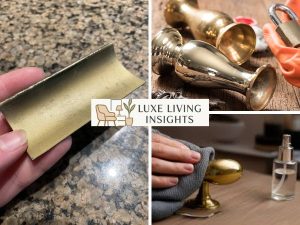
Quick Fix for White Haze on Lacquer:
-
Use a blush remover spray to release trapped moisture
-
Apply gentle heat with a hairdryer (not too close)
-
Wipe lightly with lacquer thinner for surface haze
Nothing kills the luster of a high-end heirloom quite like a sudden, ghostly fog appearing beneath the surface. This phenomenon, known in the trade as blushing, turns a crystal-clear finish into a milky white haze on furniture that seems impossible to wipe away.

Whether you are dealing with a vintage find or a fresh DIY project gone wrong, learning how to remove haze from lacquer requires a delicate balance of chemistry and patience. By understanding how moisture causes blushing, you can deploy professional-grade cloudy wood finish repair techniques to restore that mirror-like depth.
How to Remove White Haze and Blushing from Lacquer Furniture
In real-world cases, this often happens after placing a hot cup or a wet glass on a finished table. I’ve also seen it occur in garages or workshops where humidity is high, especially during summer.
The secret to a successful restoration lies in re-wetting the lacquer just enough to let the trapped moisture escape. If the clouding is localized, a blush eraser spray is your most potent weapon. This specialized aerosol spray contains a tailored solvent that softens the nitrocellulose lacquer, effectively “opening” the film to release trapped vapor.
When you apply a blush remover, you aren’t just adding a layer; you are performing an amalgamating lacquer surface repair where the fresh coat melts the old, hazy one into a single, clear bond.
For those who prefer a non-chemical approach, heat removes haze with surprising efficiency. Using a heat gun or a high-wattage hairdryer can stimulate the evaporation rate of the moisture locked in the resin. However, precision is non-negotiable. You must maintain a distance of 2-3 inches and keep the tool in constant motion.
The goal is to raise the ambient temperature of the finish enough to evaporate the water without reaching the point where the polymer bubbles or the substrate chars. It is a high-stakes game of vapor pressure management.
If the white haze is merely a surface-level surface blooming, mechanical restoration might be the path of least resistance. Using a fine polishing compound, such as Maguiar’s, allows you to gently abrade the top layer of the clouded finish.
This is particularly effective for white water rings on furniture coffee tables or stunning furniture village coffee tables. For deeper issues, a resurfacing approach using 320-grit sandpaper to level the coating followed by a fresh thin topcoat will provide the best build and clarity.
Step-by-Step Fix:
- Identify if the haze is surface-level or deep
- Try heat method first (hairdryer, low setting)
- Use blush remover spray if haze remains
- Lightly polish if only surface damage
- Sand and refinish only if necessary
Professional Restoration Comparison
| Technique | Entity / Tool | Action (ERE) | Ideal Use Case |
|---|---|---|---|
| Solvent Treatment | Lacquer Thinner | Thinner cleans surface & dissolves haze | Deep-seated blushing across large areas |
| Thermal Repair | Heat Gun | Heat removes haze via evaporation | Localized white water rings or spills |
| Surface Buffing | Polishing Compound | Polish increases shine by removing oxidation | Light surface blooming or micro-scratches |
| Structural Re-coat | 320-grit sandpaper | Sandpaper levels coating for new layers | Severe adhesion failure or deep clouding |
- White rings on wood table
- Cloudy finish on furniture
- Foggy spots after water damage
Understanding Why Your Lacquer Finish Turned Cloudy or Milky
To prevent the return of the fog, one must master the Entity-Attribute-Value (EAV) relationships of the finishing environment. The most common trigger is humidity with a threshold of 75 percent. When humidity exceeds 75 percent, the lacquer traps moisture because the solvent evaporates so quickly that it chills the surface, causing condensation to form and become entombed in the drying film.

This is why professionals obsess over flash-off time and air movement; an electric fan increases air movement, which speeds drying and ensures water doesn’t have a chance to settle.
Beyond environmental factors, chemical incompatibility often plays a silent, destructive role. A frequent mistake is applying a water-based topcoat over an oil-based stain that hasn’t fully cured. If the oil-based stain drying time is less than 72 hours, the oil seeps through acrylic, creating a chemical blush.
In this state, the oil-based stain reacts with the water-based topcoat to form a permanent, milky barrier. If you’ve encountered this on a recent project, you might also find our guide on how to get water stains out of wood coffee tables useful for identifying different types of “white” damage.
Essential Tools and Materials for Fixing Lacquer Blushing
Your restoration kit should be built on the principle of semantic interoperability—each tool serving a specific phase of the restoring clear lacquer coat process. Lacquer thinner acts as a fast evaporating agent to clean the surface, while a retarder functions as a leveling agent that extends working time.
By adding retarder, the retarder slows evaporation, giving the lacquer enough “open time” for moisture to escape before the polymer chain locks.
Additionally, keeping a shellac barrier on hand is vital for high-end pieces like hammary furniture coffee tables. Shellac blocks contaminants and ensures that subsequent layers of nitrocellulose lacquer don’t react with underlying oils.
For the final “tooth” or mechanical bond, 320-grit sandpaper or fine steel wool is used to scuff lacquer, creating the necessary texture for a sanding sealer to provide a stable build.
Proven Strategies to Prevent Haze During the Finishing Process
The most effective way to remove haze from lacquer is to ensure it never forms. Always check your hygrometer; if the relative humidity levels are climbing, it is time to stop spraying.

If you must work in less-than-ideal conditions, the retarder prevents flash-off issues by modulating the chemistry of the solvent. This retarder is a leveling agent that ensures the resin bonds to the surface smoothly without condensation interference.
Furthermore, using a sanding sealer with a large resin particle size helps create a physical barrier against moisture. This sanding sealer provides build, allowing for a flatter, more reflective final topcoat. Remember: temperature affects evaporation. Keeping your workspace warm and dry is the best de-blushing technique you will ever use.
When to Repair vs. When to Strip and Refinish
How do you know if a fresh coat melts the problem away or if you’re just masking a disaster? You must assess damage depth. If a quick wipe with lacquer thinner clears the spot temporarily, the white haze is likely near the surface.
However, if the finish is flaking or the chemical blush is trapped under multiple layers of acrylic, you may be facing a total adhesion failure. In such cases, the only solution is to strip the piece back to the substrate and start anew.