Quick answer: Most loveseats are 52 – 66 inches wide (measured arm-to-arm). Apartment-sized loveseats are usually 45–52 inches, and oversized loveseat sofas can reach 71–72 inches. If you’re shopping for a two-seater couch, the number you’re usually looking for is the arm-to-arm width (often called the loveseat “length”). In most homes, a standard loveseat lands in a comfortable middle range big enough for two adults, compact enough for tighter layouts.
Standard loveseat length in inches (quick ranges you can use)
Most loveseats fall into a few practical buckets. Use these as a fast reality-check before you measure your room:
- Standard loveseat: about 52-66 inches arm-to-arm (many popular models sit around the high-50s to low-60s).
- Apartment/small-space loveseat: about 45-52 inches, depending on arm style and cushion profile.
- Large “loveseat sofa”: about 71-72 inches when you want more lounging room in a two-seat footprint.
One reason you’ll see slightly different “standard” numbers is that brands don’t use a single universal definition loveseats can run anywhere from compact to surprisingly wide.
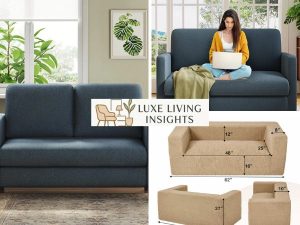
- 52 inches ≈ 4 ft 4 in
- 60 inches = 5 ft 0 in
- 72 inches = 6 ft 0 in
How loveseat length is measured (arm-to-arm width)
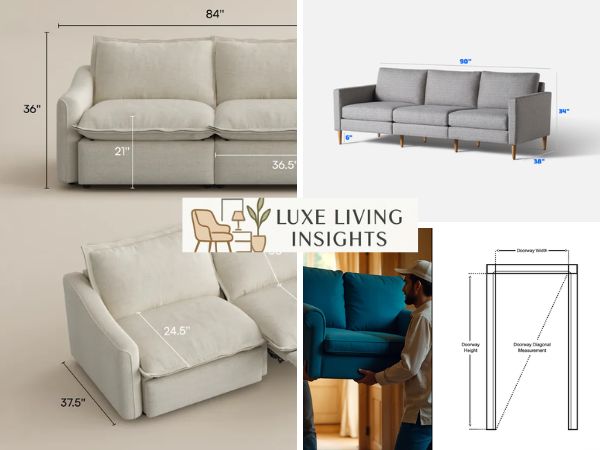
For shopping, delivery planning, and fit checks, measure the loveseat at its widest point: from the outer edge of one arm to the outer edge of the other arm. This is the number most retailers list as width (sometimes labeled “length”).
- Place the loveseat on a flat surface (or measure a taped “footprint” on the floor).
- Use a measuring tape across the front, keeping it level with the widest arm points.
- Record the arm-to-arm width in inches.
- If you’re moving it through a tight entry, also note the height and depth (front-to-back).
Tip: Two loveseats can have the same arm-to-arm width but feel very different to sit on. Thick, wide arms “use up” inches that could have been seat space.
Loveseat length by size category (compact to large)
If you want a clearer comparison, here’s a practical breakdown of common loveseat lengths in inches:
| Size category | Typical length (arm-to-arm) | Best for |
|---|---|---|
| Compact / Twin | 45-51 inches | Studios, bedrooms, reading nooks |
| Small Standard | ~52 inches | Small living rooms, apartments |
| Medium | ~58 inches | Everyday two-person seating |
| Full / Standard | 60-64 inches | Most living rooms, balanced comfort |
| Large / “Loveseat Sofa” | 71-72 inches | Lounging, taller adults, wider cushions |
If you’re deciding between a loveseat and a standard sofa, sofas typically start wider and scale up from there, while loveseats stay in the two-seat range by design.
Typical loveseat depth, height, and seat height (so it fits your space)
Length tells you if it fits a wall. But depth and height affect comfort, walkways, and how “big” the piece feels in the room. Common overall ranges:
- Depth: about 30-40 inches
- Overall height (to the top of backrest): about 30-36 inches
- Seat height (floor to cushion): commonly around the high-teens to low-20s inches, depending on cushion style
Quick fit rule: if your room already feels tight, a shallower depth and slimmer arms often look cleaner than an ultra-deep, oversized profile.
Apartment-sized loveseat length (when space is tight)
A small-space loveseat is usually about 45-52 inches long, and it’s often engineered to feel comfortable without taking over the room. Before you buy, do these fast checks:
- Wall length: mark out the loveseat length with painter’s tape.
- Walkways: keep a comfortable path from doors to seating (tight layouts feel cramped fast).
- Doorways & turns: measure entry width, hallway corners, and stair landings—sometimes depth and height are the real blockers.
If you love a more “designed” look, you can also browse curated inspiration like stunning modern luxury sofa designs for your living space to see how smaller seating can still feel elevated in a room.

Choosing the right length for two people (comfort and proportions)
A loveseat is meant to seat two people, but comfort depends on what those inches are doing:
- Shorter loveseats (45-52″) can feel cozy, but may limit “personal space,” especially with thick arms.
- Mid-range loveseats (58-64″) tend to feel balanced for daily use- enough room for two adults without dominating the room.
- Longer loveseats (71-72″) are great if you like to lounge or want wider seat cushions without jumping to a full sofa.
Also consider the “usable” seat width: the outside arm-to-arm measurement can look generous, but thick arms and cushion layout can reduce the sitting space in the middle. If you’re planning a full living area refresh, lighting matters too especially in apartments where you need layered light without clutter. For kitchen-adjacent living spaces, this guide on how many pendant lights over a 5 foot island can help you keep proportions consistent across your open layout.
- Measure your narrowest doorway and hallway width.
- Check stair turns and landing space if applicable.
- Compare to loveseat width, depth, and height (not just length).
- If it’s close, look for removable legs, modular designs, or slimmer arms.
FAQs
Is loveseat length the same as seat width? Not usually. Loveseat length is typically the outside measurement (arm-to-arm), while seat width is the space you actually sit on. Wide arms can reduce seat width even when the overall length looks generous.
Why do two loveseats with the same length feel different? Cushion shape, arm thickness, back cushion angle, and seat depth can all change comfort. One loveseat might prioritize upright support; another might be deeper for lounging.
What if my doorway or hallway is narrow? Measure the tightest point of your entry path and compare it to the loveseat’s width, height, and depth. If it’s close, look for removable legs, modular designs, or a slimmer arm profile.