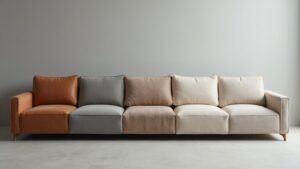
Quick summary: To take apart a reclining couch, start by unplugging power (if applicable), removing cushions, and fully closing the footrest. Most recliners separate in one of two ways: (1) seat backs release with locking levers, or (2) sections split after removing bolted base bars/cross rails. Work slowly, bag the hardware, and take photos for easy reassembly.
| What you’re doing | Where to look (real-world cues) | Tool |
|---|---|---|
| Find locking levers | Behind the backrest: rear fabric flap, or “feel inside” the seam near the arm-to-back joint | Flathead screwdriver |
| Separate sections | Underneath frame: brackets/bolts along the seam between seats or near armrests | Socket wrench / driver |
| Power recliner disconnect | Motor area: cable clips on the frame, motor mount linkage with pins | Pliers + flashlight |
You might not expect it, but many homeowners dismantle their couches when upgrading or rearranging their interiors. If you’re planning a redesign, exploring luxury sofa styles and design ideas
can help you understand how modern sofas are structured and why certain models are easier to move or disassemble.
Before you start (2 minutes that save headaches)
- Clear space, lay down a blanket, and take a quick photo of the full couch (front, back, and underside if possible).
- Put screws/bolts into labeled bags (e.g., “left backrest,” “base bars”) and tape the bag to the frame.
- If hardware won’t budge, warm the bolt head briefly and try again don’t strip it.
Quick decision tree: which method should you use?

- Look for a rear fabric flap (or a detachable upholstery strip) behind the seat backs.
- If you see two metal locking levers (left and right), you’ll likely use Method 1 (lift/release levers, then slide the backrest up).
- If you don’t see levers, flip/tilt the couch to check underneath. If you see 2-3 bars/rails bolted across the base, you’ll likely use Method 2 (remove base bars/cross rails, then separate sections).
- If it has a cord, transformer, or control buttons: add the Power Recliner steps before you start separating metal parts.
Tools and supplies checklist
You can dismantle many recliners with basic hand tools. Here’s what makes the job smoother:
- Flathead screwdriver (for locking levers and staples/clips)
- Socket wrench + a small set of sockets (common for base bolts)
- Phillips/driver bit (some models use screws instead of bolts)
- Pliers (for pins or cable clips on power recliners)
- Flashlight (lever hunting is easier with light)
- Painter’s tape + marker (label left/right sections and hardware bags)
- Furniture blankets or thick towels + stretch wrap
Safety notes (don’t skip)
- Pinch points: Recliner mechanisms have scissor-like joints. Keep fingers clear when tilting or shifting sections.
- Backs are lighter than they look—until they aren’t. Grip from the sides and lift straight up to avoid a sudden release.
- Work with a helper when you tilt the couch or remove the last base bar. The couch can twist or roll.
- Power recliners: Always unplug first. Don’t pull wires by the cord; disconnect at clips/connectors when possible.
Method 1: Remove the seat backs using locking levers (most common)
Many reclining couches (including a lot of motion and sectional recliners) have detachable seat backs secured by locking levers. Once the backs are off, the couch becomes dramatically easier to move through tight hallways and door frames.
Step 1: Remove cushions and open the rear access
Pull off loose cushions. If your couch has a rear fabric flap or upholstery strip, lift it to expose the internal frame. Some models use a Velcro-like strip; others have a tucked seam.
Step 2: Locate the rear locking levers
Look on both sides of the couch where the arm meets the back usually near the top of the frame. On couches with a center console, check the inner seams between the console and each seat. If you don’t see a flap, slide your hands into the rear seams and feel for a small metal lever sitting in a downward position.
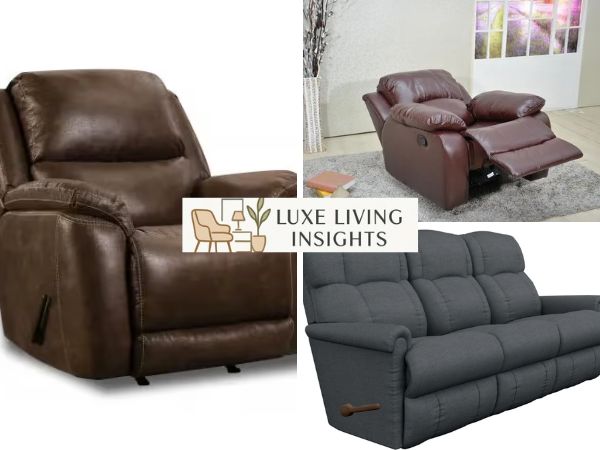
Lever-locator mini guide (when it’s “in there somewhere”)
- Start high: Most levers sit near the top third of the seat-back frame, not near the floor.
- Follow the seam: Run your fingers along the seam that lines up with the arm/back connection.
- Check both sides: You typically have one lever per backrest side (left and right).
- Use a flashlight: Shine from underneath the flap to catch the metal shape.
Step 3: Release levers and lift the backrest off
Use your fingers or a flathead screwdriver to pry the locking levers (often up; sometimes down depending on the model). While holding the lever, rock and lift the backrest straight up until it slides free. Set the backrest aside on a blanket to avoid scuffing walls or denting trim.
Step 4 (optional): Remove arms (only if your model allows it)
Some reclining couches have detachable arms secured by bolts or wingnuts. If the couch still won’t fit through a doorway, check inside the arm area (often under a dust cover) for fasteners. Only remove arms if you can clearly see how they’re attached forced prying can damage the frame.
Method 2: Split the couch by removing bolted base bars/cross rails
If your recliner doesn’t use locking levers, it often separates from underneath. This method is common on some 3-seater motion recliners and sectionals where the base structure is held together by bolted rails.
Step 1: Tip the couch safely
With a helper, tilt the couch forward so the back faces up (or carefully onto its front edge). Place a blanket under contact points to protect fabric and floors. This exposes the underside and makes bolts easier to reach.
Step 2: Locate and remove base bars/cross rails
Find 2–3 base bars/cross rails running side-to-side across the underside. Remove bolts with a socket wrench (or a driver if your model uses screws). Keep bolts grouped by rail—mixing lengths can slow reassembly.

Step 3: Separate seat sections (and console, if present)
As the last bar comes off, the couch may loosen and split into individual seats/console. Have someone hold it to prevent rolling or twisting. If sections still feel “hooked,” look for additional brackets near the armrests or along the seam between seats.
Step 4: Stabilize the mechanism for moving
Before you carry pieces, make sure footrests are fully closed and mechanisms are not hanging open. If something wants to swing, lightly wrap it with stretch wrap or a strap so it doesn’t snag door frames.
How to take apart a power reclining couch (more specific, still simple)
Power recliners add wiring, motor mounts, and connectors. The goal is to disconnect cleanly so you don’t pinch wires when separating frame pieces.
| Power recliner task | What it looks like | What to do |
|---|---|---|
| Unplug and trace the cord | Power brick/transformer under the couch | Unplug from wall first, then follow to the couch connection |
| Free cable clips | Plastic clips along the frame | Pop clips open so wires have slack (avoid pinches later) |
| Disconnect linkage pins | Metal pin at the motor mount/actuator linkage | Use pliers to pull pins carefully; bag and label them per seat |
| Separate modules | Seat sections loosen after rails/pins are removed | Support the section so wiring doesn’t tug as you pull apart |
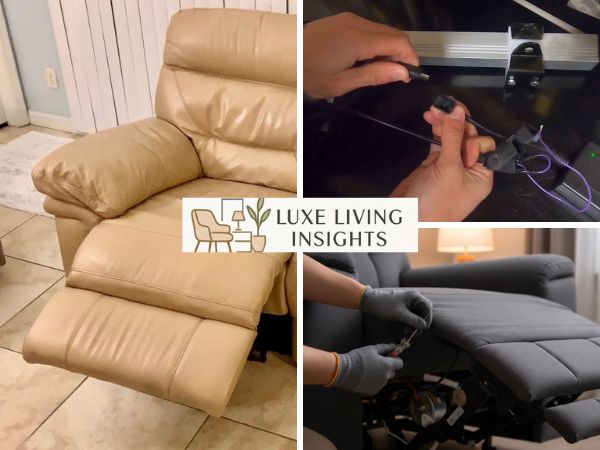
- Unplug from the wall and trace the power cable to the transformer/motor area.
- Open cable clips to create slack, then disconnect at connectors (don’t yank wires).
- At the motor mount, remove the pins that secure the linkage. These are small but critical—label them.
- Once wiring is free and rails/pins are removed, proceed with Method 1 or Method 2 to separate sections.
Common problems and quick fixes
“I can’t find the locking lever.”
- Check the inner seam between seats (especially near a console).
- Feel for a lever sitting downward and tucked against the frame.
- If there truly are no levers, switch to Method 2 and inspect the base bars/cross rails.
“The backrest won’t slide up.”
- Confirm both levers are fully released. Many backs won’t move unless both sides unlock.
- Lift straight up (not outward). A slight rock helps, but avoid twisting.
- Check for hidden screws or a fabric strip still attached and catching.
“Bolts are stuck.”
- Apply steady pressure and keep the socket seated to avoid stripping.
- Warm the bolt head briefly, then try again.
- If the bolt starts to round, stop and switch to a better-fitting socket/bit.
Moving and packing tips (so dismantling actually pays off)
- Wrap the backrests in a blanket and secure with stretch wrap corners can scuff walls fast.
- Protect controls (power buttons/USB ports) with a towel layer before wrapping.
- Label left/right on the frame with painter’s tape so reassembly is intuitive.
- Carry upright when possible: it reduces scraping and keeps mechanisms from swinging.
If you’re relocating or refreshing your interior layout, it may also be a good opportunity to explore modern luxury living room sofa sets that better match contemporary living room aesthetics and modular furniture layouts.
Reassembly tip
Rebuild in reverse order. Use your photos, match labeled bags to sections, and confirm each lever clicks fully into place before testing the recline. For power recliners, reconnect wiring with slack and re-clip cables so nothing rubs against moving metal parts.
Understanding how different sofa constructions work can also make reassembly easier, especially with sectional or modular pieces commonly seen in luxury design sofas for modern homes.
When to call a pro
If you see cracked wood, bent mechanism arms, frayed wiring, or a recliner that won’t lock back into place after reassembly, it’s safer (and often cheaper long-term) to have a furniture tech handle the repair. Forcing a misaligned mechanism can damage the frame or pinch wiring.
FAQs
Can I take apart a reclining couch by myself?
- You can remove cushions and sometimes backs solo, but tipping the couch or removing the last base bar is safer with a helper because sections can shift suddenly.
Do all reclining couches have locking levers?
- No. Many do, but others rely on bolted base bars/cross rails underneath. If you can’t find levers after checking seams, inspect the underside.
What’s the easiest way to keep track of screws and bolts?
- Use labeled bags by section (“left backrest,” “base bar 1”), then tape each bag to the frame piece it belongs to.
How do I safely dismantle a power recliner?
- Unplug first, then free cable clips and disconnect at connectors or motor mount pins before separating sections. Never pull on wires by the cord.