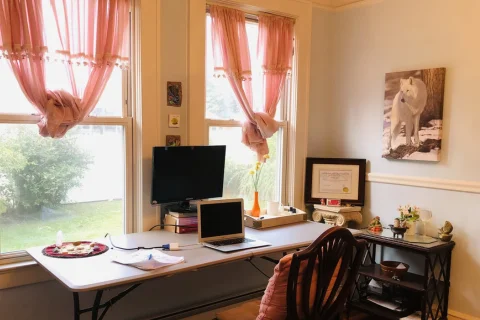
To begin, we’ll turn these principles into an easy placement checklist you can follow in minutes, along with quick remedies for common constraints, so you can set up a productive home office without renovating or buying all new furniture.

What is the feng shui “command position” for a desk?
The command position is a desk placement where you can see the entrance while seated, but you’re not directly in line with the doorway; ideally, you also have a solid wall behind you for support.
In practical home office terms, this placement reduces the “startle factor” (people entering behind you), improves your sense of control, and helps you settle into deep work faster. You don’t need to treat feng shui like superstition to benefit from this: most people focus better when they feel safe, supported, and visually oriented.
Is the command position the best desk placement for productivity?
Yes the command position is usually the best feng shui desk placement for a productive home office for at least three reasons: (1) you can see who enters (less vigilance), (2) you avoid “direct line” pressure from the doorway, and (3) a solid backing behind you creates a stable, supported posture and mindset.
Specifically, productivity improves when your brain stops scanning for surprises. If you’ve ever noticed yourself tensing when someone walks in behind you, the command position solves that problem at the layout level.
What does “solid support behind you” mean in a real home office?
“Solid support” means you have a wall or sturdy backing behind your chair not a busy walkway or open void so you feel anchored.
If you can’t get a wall behind you, you can simulate support with a high-back chair, a console table behind the chair, or even a tall bookshelf placed a short distance behind (as long as it’s stable and not visually chaotic).
What should you look at while working (wall vs view vs inspiration)?
Ideally, you should look at something that feels open and inspiring not a blank wall that reads like a “block.” If you must face a wall, expand your view with artwork or a mirror placed thoughtfully so the sightline feels less restrictive.
Evidence: According to guidance on desk “commanding position,” placing your desk so you can see the door (without sitting directly in line) is described as a key principle to help you feel more at ease and aware.
Where should your desk face in a home office?
Your desk should face so you can see the door while you work, ideally at a slight angle rather than straight-on this preserves awareness without putting you in the “path” of incoming energy and traffic.
Next, let’s translate that into easy placement options. Most home offices only give you a few realistic furniture orientations so the goal is to choose the best one you can, then fix what you can’t.
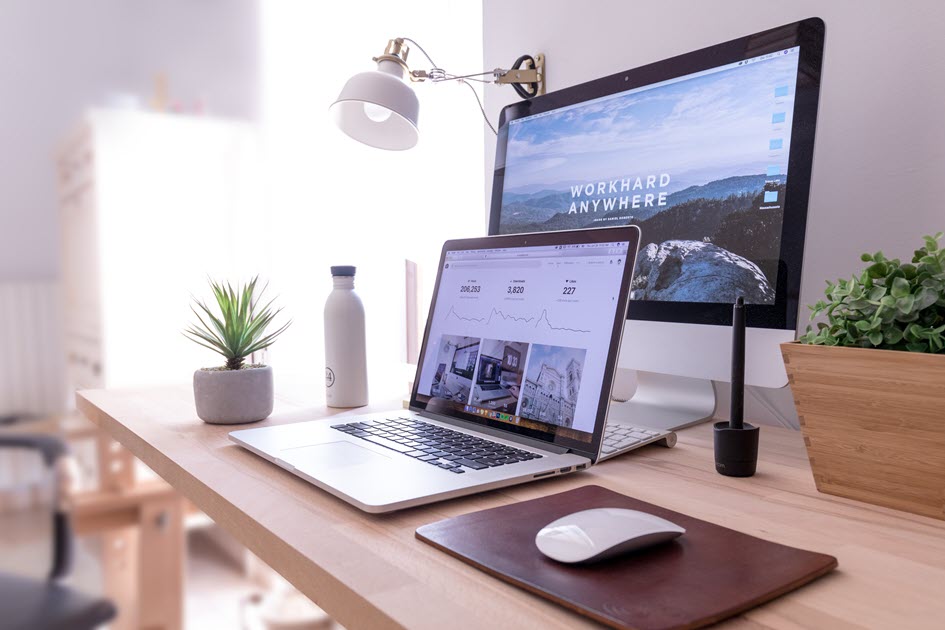
Should your desk face the door in feng shui?
Yes your desk should generally face the door (or have a view of it) for three reasons: it reduces surprise, supports confidence, and helps you feel oriented to opportunities and decisions.
However, “face the door” does not mean “sit directly in line with the doorway.” The more practical interpretation is: see the door, but avoid being in a straight shot where energy, movement, and noise come directly at you.
Desk straight-on vs desk diagonal what’s better?
Diagonal is usually better because you can see the entrance without being in its direct line, while straight-on can feel like you’re constantly “receiving” movement and attention.
To make diagonal placement look intentional (not awkward), anchor it with a rug, a desk lamp, and a clear “working zone” behind you.
Does it matter if your desk faces a wall?
Yes facing a blank wall can feel mentally limiting, especially in small rooms. If facing a wall is your only option, use one of these upgrades:
- Expansive art (landscape, horizon line) to create visual breathing room.
- A mirror placed so it expands your view (not to reflect clutter).
- A vision board or goals shelf that feels motivating rather than chaotic.
What desk placements hurt feng shui and how do you fix them fast?
The most common “bad” placements are (1) back to the door, (2) desk in line with the door, and (3) desk under heavy overhead features but you can usually fix the feel of all three with a few smart adjustments.
To connect this to everyday work: these placements increase distraction, vigilance, and discomfort. The good news is you don’t have to move walls you just need to restore awareness and reduce visual pressure.
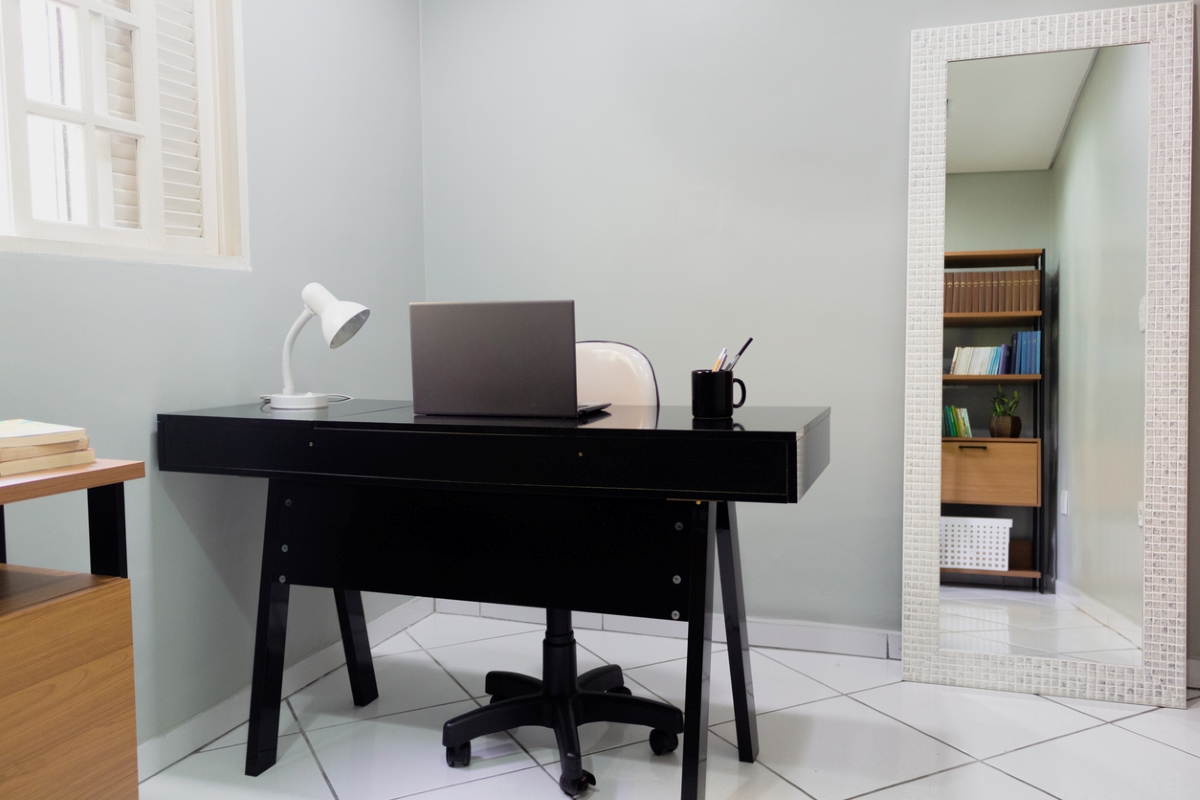
What should you do if your back faces the door?
If your back faces the door, use a mirror so you can see the doorway while seated, and strengthen “support” with a higher-back chair or stable furniture behind you.
Specifically, place a small mirror:
- On your monitor (subtle and effective), or
- On a side wall angled to reflect the door.
This reduces the startle response and helps you settle into focus without constantly turning around.
What if your desk is directly in line with the door?
If your desk sits in the direct path of the doorway, shift it slightly off-axis if possible; if not, you can use a faceted feng shui crystal (hung between you and the door) as a traditional way to “disperse” rushing energy.
More practical fixes that also work:
- Add a rug to slow visual motion.
- Place a plant between the door and your desk (if space allows).
- Use a low screen or bookcase as a gentle buffer (don’t block pathways).
What if you sit under a beam, fan, or heavy shelf?
If something heavy sits directly overhead, reduce “pressure” by moving the desk a few inches, centering yourself away from the line of the beam, or softening the overhead visual with better lighting and ceiling balance.
In feng shui language, harsh overhead features can feel like weight. In real life, they can create a subtle sense of stress especially when you sit there for hours.
Evidence: According to a feng shui guidance summary on desk placement, when you can’t sit in command position, a mirror can help you see the door; and if you’re in line with the door, a crystal is suggested to disperse incoming energy.
How do you place a desk with windows, small rooms, or shared spaces?
In small or shared home offices, the goal is to keep door awareness, avoid direct alignment, and maintain support behind you even if that support is created with furniture, screens, or lighting instead of a perfect wall.
Next, we’ll tackle the most common 2026 reality: your office is also a guest room, dining corner, or a sliver of space near a window.
Should your desk face a window or have a window behind you?
Facing a window can be great for mood and energy, but avoid having a window directly behind you if it makes you feel exposed. If the window must be behind you, add support with a high-back chair and window treatments that reduce glare and distraction.
Also, daylight matters for wellness. According to a 2014 report describing a study from Northwestern University and the University of Illinois at Urbana-Champaign, workers near windows had 173% more white light exposure and slept about 46 minutes longer per night.
What’s the best feng shui desk placement for a small home office?
There are 3 best placements for a small home office desk: (A) diagonal to the door, (B) facing into the room with a buffer behind you, or (C) facing a wall with a mirror/art “expansion” grouped by the criteria of awareness, support, and calmer sightlines.
- A (Best): Diagonal small shift, big psychological comfort.
- B (Often realistic): Facing room use a chair with strong backing.
- C (Last resort): Facing wall expand view with art/mirror.
Can you use feng shui if you share the space with family?
Yes shared spaces can still have good feng shui for three reasons: you can define boundaries, reduce visual noise, and create a consistent work “cue” your brain recognizes.
Try these “shared-space fixes”:
- Define a zone: rug + task light + one shelf = “this is work.”
- Face away from chaos: don’t work facing the busiest walkway.
- Use a closing ritual: tidy desk + close laptop = mental reset.
How should you set up your desk area so it feels calm and focused?
A calm, productive desk area needs clear surfaces, supportive lighting, and reduced visual competition because your brain processes clutter as competing stimuli, which can make focusing harder.
Next, think of this as the “micro-feng shui” around your desk. Even with perfect placement, a chaotic desktop can ruin the benefit.

What’s the simplest declutter rule for a feng shui desk?
There are 3 desk items you should keep visible at most: (1) your primary tool (laptop/monitor), (2) one writing tool, and (3) one grounding object (plant, stone tray, or personal item) grouped by the criteria of function, action, and calm.
Specifically, everything else should earn a “home” in a drawer, bin, or shelf. This keeps your work surface visually quiet so your brain doesn’t spend energy filtering noise.
Do plants help feng shui in a home office?
Yes plants are commonly recommended for three reasons: they add life energy, soften harsh lines, and bring a sense of growth into the work zone.
If you want a simple rule: pick one healthy plant you can keep alive. A thriving plant supports a thriving routine; a struggling plant becomes visual stress.
What lighting setup supports productivity (and feng shui)?
The best setup is layered light: (1) daylight when possible, (2) ambient room light, and (3) a focused task lamp. If you don’t have daylight, a full-spectrum task light is often recommended as a mood and clarity booster.
Evidence: According to the 2014 report cited earlier (Northwestern University + University of Illinois at Urbana-Champaign), workers near windows had substantially more light exposure and slept longer suggesting daylight-friendly desk placement can support sleep and wellbeing.
Which feng shui “remedies” work when you can’t move your desk?
If you can’t move your desk, the best remedies restore door awareness, reduce direct-path pressure, and add support cues often with mirrors, screens, plants, or traditional items like crystals.
Now, let’s make this realistic: many home offices simply have one “possible” wall. So your job becomes adjusting sightlines and sensations, not chasing perfection.
Mirror vs convex mirror what should you use?
A regular mirror works if it safely reflects the doorway without reflecting clutter. A convex mirror can be useful when your body is turned away from the door, because it expands your view and helps you see entrances more easily.
Does a crystal help if your desk is in line with the door?
In traditional feng shui, a faceted crystal is used to disperse fast-moving energy between you and the door. Even if you treat it as symbolic, it can still function as a visual “softener” that breaks up a harsh straight line in your sight path.
What’s a modern, non-mystical alternative to “remedies”?
If you prefer purely practical changes, use:
- A low bookcase or screen to soften direct line-of-sight.
- A plant buffer between door and desk (if it doesn’t block traffic).
- Rug + lamp to anchor your work zone and calm movement cues.
Quick 2026 checklist: How do you place your desk in 10 minutes?
The fastest method is a 5-step checklist: (1) locate the door, (2) choose a spot that sees it, (3) avoid direct alignment, (4) add solid support behind you, and (5) calm the desk surface so your brain can focus.
To finish, here’s a simple process you can follow today even if your room is tiny.

Step-by-step: What should you do first?
Start with the door. Stand in your office doorway and look at the room like an “energy map.” Where can you place the desk so you can see this entrance without sitting directly in its path?
What’s the best “default” desk position if you’re unsure?
The best default is diagonal from the door (catercorner), with a wall behind you and a clear view of the room.
What are the top 7 do’s and don’ts?
- Do: See the door while seated.
- Do: Sit with solid support behind you when possible.
- Do: Use a mirror if your back must face the door.
- Don’t: Sit directly in line with the door if you can avoid it.
- Do: Keep your desktop visually calm (less competing stimuli).
- Do: Add a plant for growth energy (and softness).
- Do: Prioritize daylight when possible to support wellbeing.
Wrap-up: In 2026, the most productive home office feng shui isn’t about perfect rules it’s about awareness, support, and calm sightlines. Put your desk in command position when you can, use mirrors or buffers when you can’t, and keep your desk surface quiet so your attention stays on your work.
Source:
- https://i.pinimg.com/736x/59/81/df/5981dfc3b55acc0385e4186e9b251318.jpg
- https://lazymaisons.com.au/cdn/shop/articles/proper-sitting-position-for-standing-desks-475278_849x.jpg?v=1697839345
- https://www.arteil.com.au/uploads/2021/12/set-up-your-corner-workstation-desk-and-computer.jpg
- https://www.bobvila.com/wp-content/uploads/2022/09/iStock-1402140253-decorating-with-mirrors.jpg?strip=all&quality=85
- https://encrypted-tbn0.gstatic.com/images?q=tbn:ANd9GcSR6MuIH992OEPP1qElnCk3-8rpWL9XheiZVA&s
- https://images.stockcake.com/public/e/e/2/ee25fb47-3ea9-46da-b909-12e907f3c72c_large/cozy-workspace-setup-stockcake.jpg
- https://encrypted-tbn0.gstatic.com/images?q=tbn:ANd9GcR4Zbc0LwgW7i7y1ECcuBom7gNenZ9zxL5LRQ&s
- https://i.pinimg.com/736x/0c/30/6e/0c306eae3e9d6cc281002a4420589944.jpg
Articles on the same topic:
-

Choose the perfect dining table size and shape using simple measurements
-

Best Folding Dining Table and Chairs for Small Spaces: Picks, Sizes, and What to Buy
-

Dining Table Sizes for 6, 8, 10 & 12 People (in cm + inches)
-

10 Best Outdoor Dining Tables Near Me for Your Patio
-

Top 10 Dining Tables in Dubai for All Styles
-
7 Best Commercial Dining Tables and Chairs for Your Business