
You can add lighting to a room without wiring by using plug-in fixtures, battery/rechargeable lights, adhesive LED systems, and smart controls so you get brighter, better-looking light without opening drywall or hiring an electrician.
Next, you’ll learn what “no-wiring lighting” really means, when you can DIY safely, and how to choose a lighting plan that fits your room’s purpose (relaxing, working, getting ready, entertaining) while still looking intentional and designed.
After that, you’ll get 10 smart, practical solutions from plug-in pendants and chandeliers to cordless sconces, puck lights, LED strips, and automation so you can layer ambient, task, and accent lighting even in rentals.
To begin, we’ll walk through a simple selection framework and a fast checklist, plus cord-hiding tips that make “no wiring” lighting look built-in rather than temporary.

What does “adding lighting without wiring” mean in a home?
Adding lighting without wiring means using light sources that don’t require new in-wall electrical work typically plug-in fixtures, battery/rechargeable lights, adhesive LED systems, and smart-bulb upgrades that work with outlets you already have.
Next, set expectations: “no wiring” doesn’t mean “no planning.” The best results still follow lighting design basics layering, glare control, and consistent color temperature so your new lighting feels like it belongs. Homes & Gardens emphasizes the value of layered lighting and choosing appropriate brightness (lumens) and color temperature (Kelvins) as core fundamentals.
Video guide you add a celling light to a room
This video we go over the process of wiring in a new ceiling light in a room without one existing (no previous wiring). It’s quite common to find rooms without ceiling lights and instead simply having an outlet be switched.
Do you need an electrician to brighten a dark room without wiring?
No you can brighten a dark room without wiring for at least three reasons: (1) plug-in fixtures can create “overhead-style” light, (2) battery and rechargeable lights have improved enough for real task lighting in many spaces, and (3) you can layer multiple light sources to increase total brightness without touching the electrical system.
Next, remember the safety boundary: you should still call a pro if you suspect electrical problems (flickering outlets, warm plates, tripping breakers, burning smells) or if you plan to modify the building’s wiring. But if you’re adding new light sources that plug in or run on batteries, most homeowners and renters can DIY safely by following product instructions and using proper anchors for ceiling/wall mounting.
How do you choose the right no-wiring lighting plan for your room?
Choose the right no-wiring plan by using a 5-step method: define the room’s main activity, build three layers (ambient/task/accent), map your outlets and cord paths, pick fixtures that match your layout, and then fine-tune bulb color and brightness for comfort.
To begin, think in layers. Homes & Gardens highlights layered lighting as a foundation of good lighting design, which matters even more when you can’t add hardwired fixtures.
- Step 1: Identify the “task zones.” Reading chair, desk, vanity, bedside, kitchen counter, entry drop zone.
- Step 2: Add ambient light. Floor lamps, plug-in pendants, uplights, LED strips for gentle glow.
- Step 3: Add task light. Desk lamp, clamp light, under-shelf LED, puck lights.
- Step 4: Add accent light. Picture lights, strips behind shelves, small uplights for corners.
- Step 5: Match the “feel.” Warm light for cozy spaces; cooler/neutral for focused work.
What are the 10 smartest ways to add lighting without wiring?
There are 10 smart ways to add lighting without wiring grouped by criteria: plug-in overhead lookalikes, wall-mounted solutions, battery/rechargeable and portable lighting, and smart automation upgrades.
Next, pick solutions that match your room’s “problem.” If your issue is a dark ceiling, go for plug-in pendants/chandeliers. If your issue is dark corners, choose uplights or floor lamps. If your issue is “no outlets where you need them,” use rechargeable sconces, puck lights, or strips.

Solution 1: How can a plug-in pendant (swag light) replace a ceiling fixture?
A plug-in pendant (swag light) can replace a ceiling fixture by using a swag hook kit (or ceiling hook) to support the fixture, then routing the cord neatly to an outlet creating a centered, overhead-style glow without hardwiring.
Specifically, swag kits are designed to hang a fixture from a ceiling hook and manage cord length; installation instructions for a swag light kit typically describe attaching the hook properly for wood or drywall and adjusting chain/cord length.
- Best for: Reading nooks, bedside “pendant instead of lamp,” dining corners, dark living rooms.
- Make it look built-in: Center the shade over the “anchor” (table, chair, bed), then create a clean cord line (more on cord hiding below).
- Bulb tip: Use a bright LED bulb (and dimmable if possible) so one pendant can actually move the needle.

Solution 2: How do plug-in chandeliers work without hardwiring?
Plug-in chandeliers work by using a corded conversion (or a chandelier designed as plug-in), then mounting the fixture to a ceiling hook/anchor so the weight is supported safely while the cord runs to a standard outlet.
Next, treat weight like the main risk variable. If the chandelier is heavy, you must use the correct ceiling anchor and follow the manufacturer’s limits; the “no wiring” part does not eliminate the need for safe mounting.
- Best for: Dining areas, entry statements, bedrooms with no overhead light.
- Style tip: Use a ceiling medallion (lightweight decorative) to make it look intentional, even if the cord is plug-in.
- Comfort tip: Put the chandelier on a smart plug so you can dim via smart bulbs or schedule it (see Solution 10).

Solution 3: Are plug-in wall sconces the fastest “built-in” look?
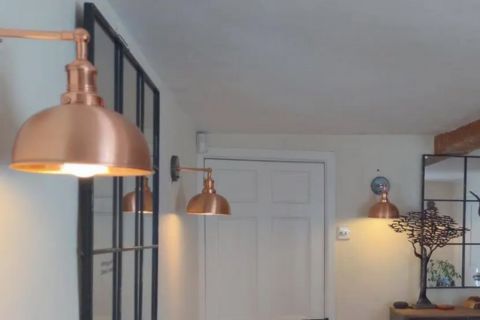
Yes plug-in wall sconces are often the fastest way to get a “built-in” look for three reasons: they create symmetrical, architectural lighting, they mount at eye level where light feels cozy, and they can be installed without opening the wall.
Next, make them look professional by committing to symmetry: mount them at the same height, use matching shades, and route cords in a consistent direction so the room reads as designed not improvised.
- Best for: Bedside lighting, living rooms flanking a sofa or fireplace, hallways, reading corners.
- Placement rule: Sconces typically look best when the light source lands near eye level when seated (bedside) or standing (hallway).

Solution 4: How do battery or rechargeable wall sconces work for renters?
Battery or rechargeable wall sconces work by using cordless power (built-in rechargeable modules or rechargeable bulbs), allowing you to mount a sconce where you want light without wiring, outlets, or visible cords.
Specifically, renter-focused guides describe installing decorative sconces while powering them with battery-operated or rechargeable solutions, which is why these are popular for rentals and older homes.
- Best for: Bedside walls with no outlets, hallways, above a mantel, accent lighting over art.
- Reality check: Cordless sconces usually provide less brightness than plug-in fixtures use them for ambient and accent, and add task light elsewhere.
- Maintenance tip: Build a charging routine (e.g., every Sunday night) so lights don’t “die” at the worst time.

Solution 5: Where should you use LED puck lights for instant task lighting?
You should use LED puck lights anywhere you need focused, local brightness under cabinets, inside closets, on shelves, in pantries, and in dark corners where lamps don’t fit.
Specifically, many puck-style and under-cabinet lights use magnets or adhesive metal plates for quick installation and easy removal for charging.
- Best for: Kitchens (under cabinets), closets, laundry areas, bookcases, display shelves.
- Choose features by need: Motion sensor (closets), remote control (high shelves), dimming (night use).
- Upgrade tip: Add multiple pucks rather than one bright one to reduce harsh shadows.

Solution 6: How do LED strip lights add ambient glow without wiring?
LED strip lights add ambient glow by sticking to surfaces (shelves, headboards, TV backs, toe-kicks) and plugging into a nearby outlet or USB creating a soft, continuous band of light that makes the room feel brighter and more modern.
Next, strips work best when the LEDs are hidden from direct view. When the strip is concealed behind a lip or diffuser, you get glow not glare.
- Best for: Behind TVs, under floating shelves, under beds, along crown molding (if there’s a ledge), inside bookcases.
- Look expensive: Use a diffuser channel to smooth hot spots and create a premium “wash.”
- Comfort tip: Choose warm or warm-neutral color temps for relaxing areas; cooler temps for work zones.

Solution 7: When is a floor lamp better than overhead lighting?
A floor lamp is better than overhead lighting when you need flexibility, corner brightening, or soft uplight without changing the room while overhead-style lighting is better when you need broad coverage from above.
However, you can mimic “overhead feel” with the right floor lamp: a torchiere throws light upward to bounce off the ceiling, which increases overall brightness with minimal glare.
- Floor lamp wins for: Rentals, moveable layouts, corners, living rooms without ceiling lights.
- Overhead wins for: Center-room activities, dining, consistent general illumination.
- Pro styling tip: Use two floor lamps or a floor + table lamp pairing to reduce shadows.

Solution 8: How can table lamps create a “designed” lighting scheme?
Table lamps create a designed lighting scheme by delivering consistent, human-scale light at seating height making the room feel warm and balanced, especially when you use pairs or repeat similar shapes and shades.
Next, the secret is repetition: two matching lamps on a console, or two similar lamps in the same finish across the room, creates visual cohesion (and a brighter total effect).
- Best for: Living rooms, bedrooms, entry consoles, nightstands.
- Scale rule: Bigger shades usually read more intentional; tiny lamps often read like “temporary fixes.”
- Make it smarter: Put lamps on a smart plug so they turn on automatically at sunset (Solution 10).
Solution 9: What clip-on, clamp, or swing-arm lights work in tiny spaces?
Clip-on, clamp, and swing-arm lights work best in tiny spaces because they add targeted task lighting without taking up floor or surface area perfect for desks, shelves, headboards, and small nightstands.
Specifically, clamp-on desk lamps are frequently recommended for saving space while maintaining strong task lighting. (Buyer guides for desk lamps also highlight clamp-on designs as useful for tight setups.)
- Best for: Small bedrooms, dorms, studio apartments, compact home offices.
- Glare control: Choose adjustable heads so light hits the page/keyboard not your eyes.
- Cable tip: Route cords behind furniture legs or along shelf undersides to keep it tidy.
Solution 10: How do smart bulbs, smart plugs, and timers upgrade lighting instantly?
Smart bulbs, smart plugs, and timers upgrade lighting instantly by adding schedules, automation, and scenes to the lights you already own so your room feels brighter and more consistent without installing anything new.
Specifically, TP-Link’s guidance for smart devices explains using schedules, away mode, and timers to control smart plugs and bulbs making lighting automatic and predictable.
- Best for: Renters, busy households, consistent morning/evening routines.
- Easy win: Put two living room lamps on one smart plug and schedule them for sunset.
- Security win: Use “away” lighting patterns when traveling.
Evidence: According to TP-Link (Kasa smart devices support), their guidance demonstrates how to set up Schedule, Away Mode, and Timer features for smart plugs and bulbs (published July 2024), enabling automated lighting routines without rewiring.
What should you avoid when adding lighting without wiring?
You should avoid no-wiring lighting mistakes that create unsafe mounting, visual clutter, or poor light quality because “no wiring” should still look good and function well.
Next, think in antonyms (microsemantics): safe vs risky, tidy vs tangled, bright-enough vs glarey, renter-friendly vs damage-prone. When you choose the “safe/tidy/comfortable” side of each pair, your lighting upgrade feels like a real improvement not a temporary workaround.
What are the biggest safety mistakes with plug-in pendants and cord kits?
The biggest safety mistakes are: using the wrong ceiling anchors, exceeding weight limits, hanging fixtures from weak surfaces, and routing cords where they can be pulled or tripped over. Swag kit instructions emphasize using the proper fasteners for wood vs drywall and securing hooks correctly because the hook is what carries the load.
- Avoid: “It feels tight, so it’s fine.”
- Do instead: Use the correct anchor type, tighten fully, and test the hook gently before hanging the fixture.
- Avoid: Cords crossing walkways.
- Do instead: Route cords along edges and behind furniture, then secure with clips or covers.
Do cord covers damage walls or violate rental rules?
Cord covers can damage walls if the adhesive is too aggressive, if paint is fragile, or if removal is rushed. In rentals, the safest approach is to use removable adhesive solutions (or route cords behind furniture and along baseboards) so the upgrade stays reversible.
Next, if you’re unsure, test adhesive on a hidden spot first, and remove slowly with gentle heat (like a hairdryer) to reduce paint pull then patch only if needed.
Can you use no-wiring lighting in bathrooms, kitchens, or humid areas?
You can use no-wiring lighting in kitchens and bathrooms, but you should be selective: choose products intended for the environment, keep plug connections away from splash zones, and prioritize moisture-appropriate fixtures. If you’re adding battery lights, use them in places that stay dry and secure.
Next, treat bathrooms as a “higher caution” room. If you need permanent, high-output lighting in wet zones, that’s typically where hardwired, rated fixtures are safer so use no-wiring options as supplementary light (mirror area accent, cabinet lighting, night lighting) rather than risky placement near water.
How do you make no-wiring lighting kid- and pet-friendly?
Make no-wiring lighting kid- and pet-friendly by reducing pull risks and tip risks: choose sturdy lamps, secure cords, avoid dangling cords within reach, and keep rechargeable lights mounted firmly so they don’t become “toys.”
- Anti-tip strategy: Place floor lamps behind furniture corners or use heavier bases.
- Cord strategy: Shorten cords, route behind furniture, and avoid loops that can snag.
- Night strategy: Use motion-sensor puck lights in hallways/closets for safer nighttime movement.
Evidence: According to Northwestern Now (Aug 2014), office workers with windows received 173% more white light exposure during work hours and slept an average of 46 minutes more per night than those without windows supporting the idea that better light access can positively affect wellbeing.
Articles on the same topic:
-

What Size Pendant Light for Living Room? Dimensions Height Guide
-

Outdoor Covered Patio Lighting Ideas That Actually Work
-

How to Remove a Fluorescent Light Cover (Lens) Safely: Tabs, Clips, and Sliding Diffusers
-

How Many Pendant Lights Over a 5 Foot Island? The Definitive Spacing & Sizing Guide
-

Set the Perfect Chandelier Height Above Dining Table: Inches, Ceiling Rules & Sightlines
-
What Is Scandinavian Design and What Makes This Style So Distinctive