Quick Answer: Hand Knotted vs Hand Tufted Rugs
- Best for durability: Hand-knotted rugs (last 50–100+ years)
- Best for budget: Hand-tufted rugs (5–15 years lifespan)
- Best for high-traffic areas: Hand-knotted rugs
- Best for soft feel: Hand-tufted rugs
- Worst for humidity: Hand-tufted rugs (latex backing can break down)
In short: Choose hand-knotted rugs for long-term investment, and hand-tufted rugs for affordable, stylish spaces.
Price vs. Value: Why the Cost of hand knotted vs hand tufted
When you evaluate hand knotted vs hand tufted rugs, you are looking at two different financial philosophies. A hand-knotted rug is a premium investment piece. It serves as a heirloom because its lifespan often exceeds 50-100+ years.
In contrast, a hand-tufted rug is affordable and mid-range. It typically lasts 5-15 years. This difference stems from the production time. An artisan spends 6-12+ months on a single knotted piece. A tufted rug takes only 1-3 weeks.
Hand-knotted rugs offer a high area rug investment value because value increases for knotted rugs over time. They often appreciate in value as they become antique oriental rugs. Meanwhile, hand-tufted rugs are like high-street fashion.
They are stylish today but depreciate as the latex adhesive breaks down. In the rug craftsmanship comparison, you pay for the labor-intensive nature of hand-tied knots. A weaver uses loom to tie each individual knot. This creates a physical bond that lacks glue. Hand-tufted rugs require latex to stay together. This synthetic adhesive is cheaper but less durable.
Choosing the Right Construction for Your Home Traffic and Lifestyle
Your home environment dictates which floor covering price points make sense. High-traffic area suits hand-knotted rugs perfectly. Because individual knots create pattern and structure, the fibers stay secure.
Heavy foot traffic damages tufted rugs over time. The yarn in a tufted rug is merely punched into a primary canvas foundation. Without a physical knot, the fibers can pull out.
Hand-knotted rugs are the gold standard for entryways and hallways. They handle the wear and tear of daily life and pair beautifully with stunning luxury sofa designs.

However, hand-tufted rugs offer a soft and plush feel. They are ideal for budgets and low-to-moderate traffic areas. Many homeowners choose a carpet hand-tufted with wool for a nursery or bedroom. These areas prioritize comfort over century-long durability.
Furthermore, design trends favor hand-tufted rugs. They allow you to experiment with modern rugs and unique shapes like round rugs without a massive financial commitment, especially when complementing stunning luxury tufted sofas.
The Backing Test: How to Verify Authenticity Before Buying
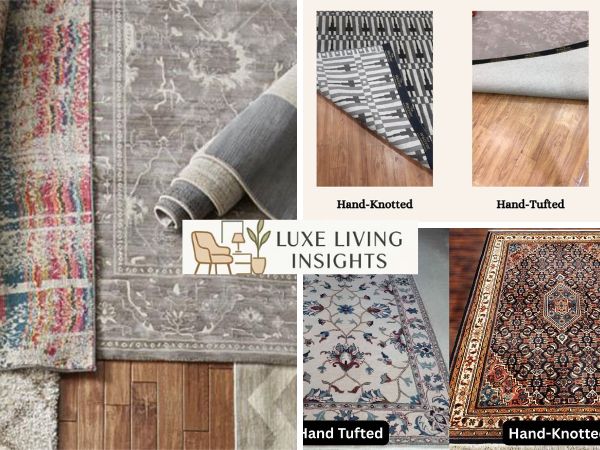
To ensure you get the right price value, you must identify the rug accurately. The flip test is the most reliable method. When you flip a hand-knotted rug, the backing is a mirror image of the front.
You can see every hand-tied knot. This mirror image identifies hand-knotted construction immediately. There is no secondary backing to hide the work.
A hand-tufted rug has a canvas with glue on the bottom. An artisan operates tufting gun to inject yarn into a scrim fabric. Then, they apply latex and a protective cloth. This secondary backing covers tufted fibers to keep them from falling out.
Another clue is the fringe. In a knotted rug, the fringe indicates construction method because it is an integral part of foundation. It consists of the warp threads from the vertical loom.
In a tufted rug, the fringe is sewn or glued on as an afterthought. This distinction is vital when placing a rug under pretty dining room tables to ensure the rug foundation doesn’t slip.
| Feature | Hand-Knotted | Hand-Tufted |
|---|---|---|
| Construction | Individually tied knots | Yarn punched into a canvas |
| Adhesive | None | Latex/Glue |
| KPSI | High/Detailed | N/A |
| Fringe | Integral | Attached/Glued |
Material Performance: Wool, Silk, and Synthetic Adhesives
Material science plays a huge role in rug longevity analysis. Most luxury flooring uses wool or silk. Wool fiber provides stain resistance and resilience.
In hand-knotted carpets, the wool is knotted around warp threads. This creates a sturdy structure. Wool is a natural material that offers durability.
Silk adds shimmer to knotted rugs, allowing for intricate details that a tufting gun cannot replicate. However, hand-tufted rugs often use wool, viscose, or bamboo silk. Bamboo silk creates texture and a high-low effect. The main weakness in tufted rugs is the latex. Latex secures backing, but it is sensitive. Over time, the latex can become brittle.
It may even release a chemical smell when new. Water dissolves adhesive if the rug gets too wet, leading to a crumbling foundation. Hand-knotted rugs do not have this issue because they rely on mechanical knots and sit perfectly next to stunning oak furniture coffee tables.
Maintenance and Preservation for Longevity
Proper maintenance costs vary between these two types. Professional washing cleans knotted rugs effectively. Because they lack glue, they can handle wet cleaning. This helps maintain the wool’s natural oils. Hand-knotted rug cleaning is a deep process that ensures the piece lasts for generations.

Hand-tufted rugs require more caution. Avoid excessive moisture to protect the latex adhesive. You should spot clean using a blotting motion. Never scrub the fibers. For both types, vacuuming must avoid beater bar use. An aggressive beater bar damages rug pile by pulling at the hand-tied knots or dislodging the punched fibers.
Additionally, a high-quality rug pad protects flooring and reduces friction. This rug pad prevents the canvas foundation from rubbing against the floor, extending the life of the scrim fabric, especially underneath stunning large luxury sofas for your dream living room.
Defining Your Investment: Heirloom Quality vs. High-Street Fashion
Ultimately, your choice depends on your long-term design goals. If you want a piece of history, go with hand-knotted excellence. Collections like Chaos Theory or Project Error represent the pinnacle of artisan skill.
These rugs are true masterpieces of weaving. They handle wear and tear and can be passed down to your children. They are sustainable textiles because they do not end up in landfills every decade.
If you prefer trendy decor, hand-tufted style is the winner. The Tattvam collection by Gauri Khan or the Country Gathering collection by Tatiana de Nicolay offer a plush, modern feel. These are affordable enough to replace when your style evolves.
They provide incredible warmth and comfort at a lower price point. Whether you choose the meticulous labour of a loom or the efficiency of a tufting gun, understanding these technical differences ensures you shop with confidence.
Choose a hand-knotted rug if:
- You want a long-term investment
- Your home has high foot traffic
- You prefer natural materials and craftsmanship
Choose a hand-tufted rug if:
- You are decorating on a budget
- You like to change styles frequently
- The rug will be placed in low-traffic areas like bedrooms
Frequently Asked Questions
Is a hand-knotted rug worth the money?
Yes. A hand-knotted rug is a lifelong investment. While the upfront cost is high, its durability allows it to last over a century. Unlike synthetic alternatives, these rugs often appreciate in value.
They are considered genuine pieces of art rather than simple floor coverings. The labor-intensive process ensures each piece is unique.
How can you tell if a rug is hand-tufted or hand-knotted?
The most effective method is to examine the backing. Flip the rug over. A hand-tufted rug has a canvas or fabric cloth glued to the bottom. This hides the latex used to secure the yarn.
A hand-knotted rug has no such covering. Its design is a mirror image on both sides. You can clearly see the individual knots tied to the warp threads.
Do hand-tufted rugs smell?
Sometimes. Because the carpet hand-tufted technique uses latex glue to secure the fibers, a new rug may emit a slight chemical odor. This burnt rubber smell is common with synthetic adhesives.
It usually dissipates with proper ventilation. Hand-knotted rugs do not have this issue because they are made without glue.
Which is better for high-traffic areas?
Hand-knotted rugs are significantly better for high-traffic areas. The hand-tied knots are structurally superior. They will not shed or pull apart under heavy use.
In contrast, hand-tufted rugs rely on glue. Constant walking can cause the adhesive to fail, leading to shedding and fiber loss.
Conclusion
Understanding hand knotted vs hand tufted differences helps you choose the perfect rug for your budget. Whether you seek a 100-year heirloom or a trendy update, focus on the backing and materials. Visit luxelivinginsights at luxelivinginsights.com for more interior tips. Please share your thoughts in the comments!