
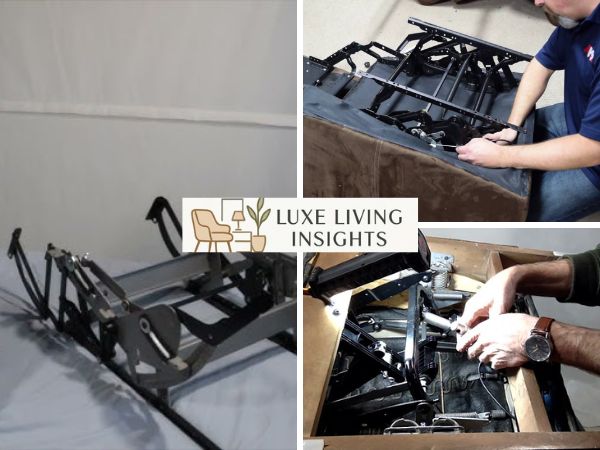
How to Fix or Replace a Recliner Release Handle and Cable
This is the most common recliner problem. In most cases, the issue comes from the internal metal mechanism under the chair.
It is a common frustration: you are ready to get up, but your chair refuses to budge. When a recliner chair stays extended, the issue usually lies within the scissor mechanism. This linkage system enables the smooth expansion and retraction of the footrest.
Over time, these metal joints can become bent or misaligned due to excess weight or accidental force. If the damage is severe, you might need to learn how to take apart any reclining couch to access hard-to-reach components.
To start, flip the chair over to gain underside access. Use a flashlight to inspect springs and look for any debris like rugs, toys, or pet hair that might be blocking movement. If you notice a bent lever, you can often straighten it using needle-nose pliers to restore structural integrity.
A critical component to check is the locking pawl. This small metal piece is designed to engage with a toothed plate to hold the chair in its closed or upright position.
If the mounting screws on the locking assembly are loose, the pawl will not seat correctly, causing the footrest to pop back out. Tighten mounting bolts firmly to ensure the mechanism reaches its mechanical fail-safe point.
Here are the key recliner parts you should check:
| Component | Attribute | Common Value/Status |
|---|---|---|
| Recliner | Mechanism Type | Manual/Electric |
| Scissor Linkage | Condition | Bent/Straight |
| Locking Pawl | Status | Loose/Damaged |
| Frame | Composition | Hardwood/Metal |
Repairing and Replacing the Release Handle or Cable Assembly
If your release handle feels limp, the trigger cable has likely snapped or disconnected. The handle initiates the release by pulling a drive cable that unlatches the locking mechanism.
First, take photos of the current routing so you remember how the cable is threaded. If the cable is broken, you will need a universal replacement. These are typically made of plastic or zinc alloy and vary in length. To install, pull the trigger cable through the frame and secure it to the mounting bracket.
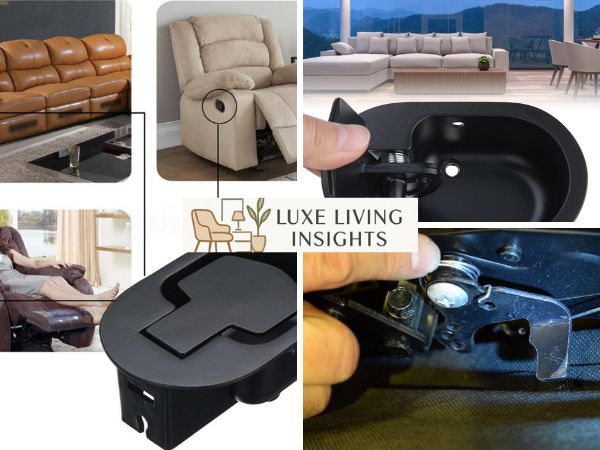
Sometimes, the handle itself is the culprit. If the mounting screws are stripped, the handle cannot exert enough force to activate the latch system.
In this case, replace the handle assembly entirely to restore ergonomics and ease of use. For those looking to upgrade rather than repair, exploring luxury sofa chairs for elegant living spaces can provide a more durable alternative.
How to Adjust Reclining Tension for Better Support
Reclining tension determines how much effort is needed to lean back. If the chair is too loose, it feels wobbly; if it is too stiff, it becomes a workout just to relax. Properly setting the tension ensures the spring provides tension that matches your body weight.
Locate the adjustment points underneath the seat. These are usually wing nuts or thumb wheels attached to the tension springs. The user adjusts the wing nut to find a balance.
To tighten tension, turn the adjusters clockwise. This increases footrest resistance. For a looser feel, turn counterclockwise.
Always adjust both sides the same amount to keep the chair balanced. A quarter turn often provides a significant difference. After each turn, sit in the chair to test the feel.
The motion should be smooth but provide enough resistance to stay in place without effort. This level of comfort is what you’d expect when reading honest reviews of designer sofas.
Troubleshooting Electric Recliner and Lift Chair Motor Issues
Electric recliners offer luxury but introduce electrical continuity risks. When your power recliner stops moving, the motor might be receiving power but failing to drive the linear actuator. Ensure the power cord connects wall outlet points securely.
Start with the power supply. Check the wall outlet and ensure the transformer (which usually handles 110-240V input) is outputting the standard 29V DC. If you hear a humming sound when pressing the remote control, the actuator might be jammed.
Test the hand control for stuck buttons. Often, electrical wires at connection points become frayed. Use a multimeter to test for continuity in the switch. If the motor is completely silent and the LED indicator is off, the power cord or power supply box likely needs replacement.
- Motor drives linear actuator
- Voltage powers motor
- Switch breaks circuit
Eliminating Squeaks and Improving Motion with Proper Lubrication
Friction is the enemy of kinetic furniture. Dry pivot joints and metal-on-metal contact cause squeaking and wear. To fix this, apply a silicone lubricant to all moving parts. Lubricant reduces friction and protects the integrity of the bushing material.

Avoid heavy grease, as it attracts debris. Silicone spray or dry graphite reduces friction without creating a mess. Target the bushings, rivets, and scissor linkage.
After applying, work the mechanism back and forth to distribute the oil. This simple maintenance prevents binding and reduces wear on the galvanized steel springs.
When to Call a Professional vs. DIY Repair
While most component replacement tasks are DIY-friendly, some issues require specialized help. If you find cracked hardwood in the frame or sheared metal brackets, the structural integrity is compromised.
This is especially important for heavy pieces paired with stunning oak furniture coffee tables that require a stable environment.
High-tension springs can be dangerous to replace without a spring puller tool. Furthermore, if your chair is from a brand like La-Z-Boy, check the manufacturer label for your model number. Opening sealed components or motors might void your warranty.
Common Recliner Problems and Quick Fixes
-
Recliner won’t close → Check scissor mechanism
-
Footrest stuck open → Inspect locking parts
-
Handle not working → Replace cable
-
Recliner too stiff → Adjust tension springs
-
No power → Check power supply and cables
FAQ How do I know if my recliner cable is broken?
How do I know if my recliner cable is broken?
If the release handle has no tension and moves freely without activating the footrest, the drive cable is likely snapped. You can confirm this by flipping the chair; a broken cable will often hang loosely from the lever or be disconnected from the latch system.
What tools are essential for recliner mechanism repair?
To perform effective repairs, you should assemble a toolkit including Phillips and flathead screwdrivers, needle-nose pliers, an adjustable wrench, and a flashlight. For electric recliner troubleshooting, a multimeter is necessary to test the motor and power supply.
How often should I lubricate my recliner?
To prevent future binding and squeaking, you should clean and oil the moving joints every three months. Use a dry cloth to remove dust before applying a silicone spray to the pivot points and linkage system.
Can I fix a power recliner that has no power?
Yes, start by checking the wall outlet and the power cord for visible damage. Ensure all electrical wires are securely plugged into the transformer. If the chair remains unresponsive, try unplugging it for 5 minutes to reset the electrical glitches.